
Choose potato dry cleaning equipment by testing how readily the incoming soil separates and what cleanliness the next process needs. Loose soil and firmly attached deposits create different duties. Compare configurations using representative crop samples, measured feed and discharge conditions, available space and transfer requirements. Accept the arrangement against agreed residual soil and crop condition criteria under a defined operating load.
Key takeaways
- Classify loose, brittle and smearing soil separately before comparing equipment.
- Choose board length using layout requirements and comparative crop trials.
- Keep individual machine capacities distinct from configured line output.
- Accept residual soil, crop condition and downstream suitability together.
Start with the soil that must leave the potatoes
A dry cleaning purchase becomes difficult when the requirement is simply “remove the soil.” Loose earth between potatoes, brittle deposits on their surfaces and damp soil pressed into recesses present different separation problems. A machine that releases loose material may leave attached deposits visible. Before selecting equipment, describe the incoming contamination and the condition required at discharge. The useful question is whether the remaining soil will interfere with the next operation.
For manual selection, the requirement may be enough surface visibility to make consistent decisions. Packing may impose a different appearance requirement, while grading also needs predictable material movement. Set these requirements separately instead of treating one clean-looking sample as proof for every duty. At Tianjin Goldilocks, we use the intended downstream task to frame the equipment discussion and the crop trial, with acceptance conditions agreed for the actual project.
Separate loose contamination from attached soil
Inspect samples from several parts of the delivery before disturbing them. Record whether soil falls away during ordinary handling, breaks into crumbs when gently rubbed, or smears across the skin. These observations describe the likely cleaning challenge without requiring an arbitrary moisture threshold. Also note clods, potato size distribution and existing surface marks. Keep contrasting samples separate so that an easy portion cannot conceal the condition that will determine operating limits.
Dry separation depends on mechanical contact overcoming the attachment between soil and potato. Loose material can leave readily; cohesive deposits may remain attached or spread under contact. Crop condition matters because additional handling can also change the potato surface. A trial therefore needs two observations together: how much unwanted material remains and how the crop condition changes. Neither the soil description alone nor a nominal capacity establishes that balance.
Choose the brush cleaner around duty and available length
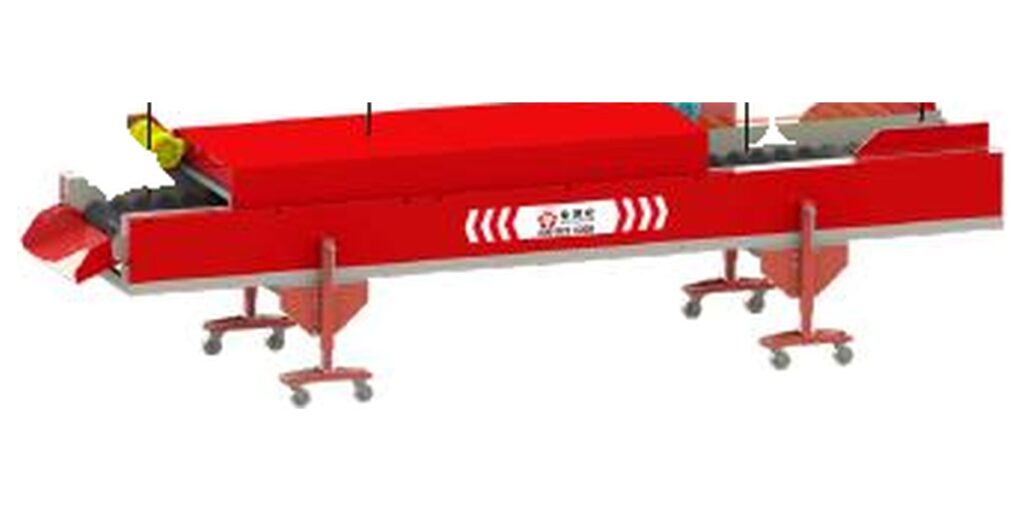
The potato dry cleaning machine uses rotating brushes to remove surface soil while potatoes move forward continuously. Its long-board and short-board versions can operate alone or in a line. The stated capacity is 7-10 t/h. This identifies the cleaner’s published capacity range; it does not establish the output of a complete receiving, selection, grading and packing arrangement under a particular soil condition.
The listed long-board dimensions are 5300 × 1550 × 1350 mm, compared with 3800 × 1550 × 1350 mm for the short board, with adjustable height 1350-1700 mm. Use that length difference when assessing the available installation envelope and transfer positions. Do not infer a quantified cleaning advantage from length alone: the records provide no comparative removal result. Select between versions using the space available and a representative trial against the same discharge requirement.
Use mobile receiving when the intake position drives the choice
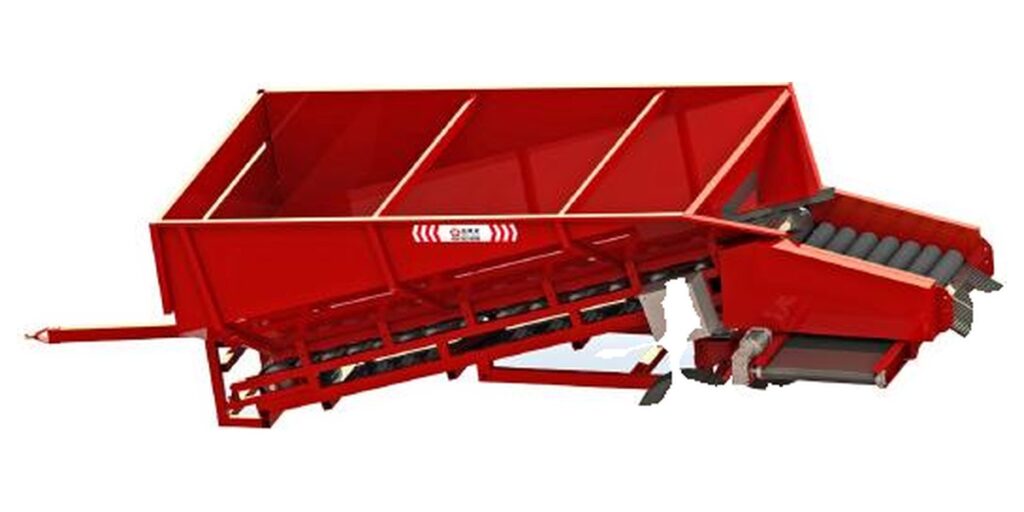
The mobile potato cleaning machine combines a 500 mm effective belt, rubber cleaning rollers and a tow bar. Its stated applications include field intake, bulk and ton-bag receiving, and soil removal; capacity is approximately 15 t/h. This makes receiving conditions central to the selection discussion. Mobility addresses where material enters the process, while a crop trial establishes whether the cleaning result meets the next operation’s requirement.
Check connection heights against the actual receiving and discharge arrangements. The published inlet height is 830-1300 mm and outlet height is 750-1050 mm, alongside an adjustable machine height of 1450-1750 mm. These figures describe different dimensions and should remain distinct in the layout review. If this receiving stage feeds a cleaner stated at 7-10 t/h, reconcile the material flow between them. The higher receiving figure cannot be transferred to the downstream cleaner.
Configure the full route around the limiting operation
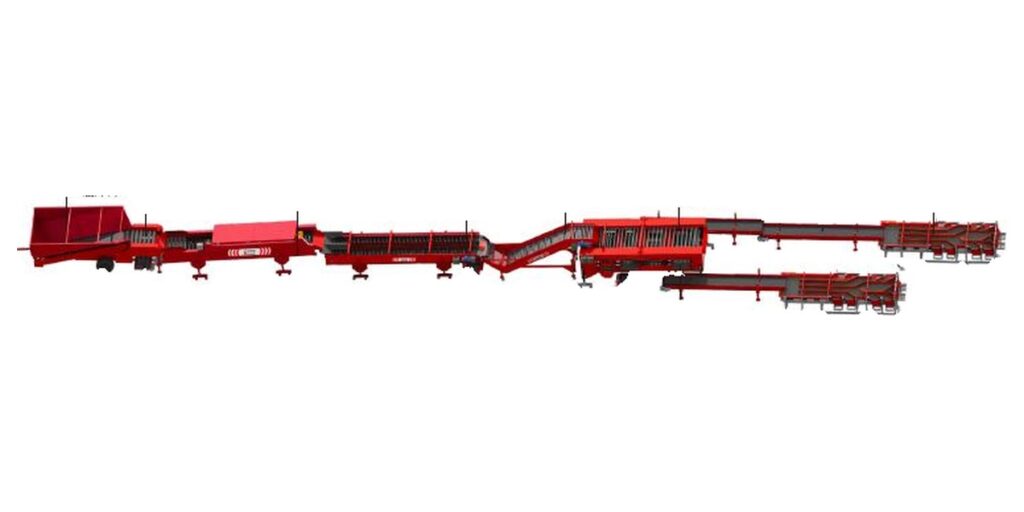
The potato dry-cleaning sorting line combines a cleaning machine, dry cleaner, selection platform, lifter, sorting machine, conveyor and bagging machine. Each module can be repositioned or used independently, and capacity is configured to project requirements. Choose this approach when the purchasing problem includes the complete route from bulk receiving through selection, grading and packing, rather than a single cleaning duty.
Map the required flow through every operation, including removed soil and material taken out during selection. Compare the available floor area with equipment envelopes, transfer positions and space needed to reach operating and maintenance points. The modular dry-cleaning line layout guide develops the flow assessment, while our potato processing solutions provide context for discussing the wider process. Whole-line acceptance should cover the required flow and downstream suitability together.
| Equipment | Published capacity | Configuration and functions | Stated process role |
|---|---|---|---|
| Potato dry cleaning machine — Long-board / short-board versions | 7-10 t/h | Rotating brushes; long and short board versions can operate alone or in a line | Dry cleaning before manual selection, grading or packing |
| Mobile potato cleaning machine — Mobile cleaning machine | Approximately 15 t/h | 500 mm effective belt; rubber cleaning rollers; tow bar; height can be adjusted for different line connections | Field intake; bulk and ton-bag receiving; soil removal |
| Potato dry-cleaning sorting line — Dry-cleaning sorting line | Configured to project requirements | Cleaning machine, dry cleaner, selection platform, lifter, sorting machine, conveyor and bagging machine; each module can be repositioned or used independently | Bulk potato receiving, dry cleaning, manual selection, grading and packing |
Run separate trials for easy and difficult crop conditions
Build the trial around identifiable lots rather than one mixed demonstration sample. Include the normal expected condition and a realistically difficult condition, such as potatoes carrying more firmly attached soil. Record the source, visible moisture condition, size range, initial contamination and existing marks for each lot. Retain an untreated comparison sample. Agree how many potatoes or how much material will be inspected, then apply that sampling method consistently before and after cleaning.
Begin with a controlled feed and record the actual incoming mass over a timed interval. Observe whether flow remains continuous, whether soil separates, and whether deposits persist or smear. Where an adjustment is available and agreed for the trial, change one condition at a time and repeat the comparison. Do not combine results from contrasting crop lots into a single removal claim; report which condition met the requirement at which measured feed.
| Observed condition | Comparison to make | Record | Decision supported |
|---|---|---|---|
| Loose soil leaves, but attached patches remain | Compare untreated and discharged potatoes from the same lot | Location and extent of remaining deposits; measured feed | Determine whether the discharge meets the downstream visibility requirement |
| Damp deposits smear during the trial | Run the difficult lot separately from the easier lot | Incoming condition and surface appearance after cleaning | Assess whether the proposed dry process suits this crop condition |
| Cleaning result changes during uneven feeding | Compare steady feeding with the observed intake variation | Timed incoming mass and discharge sample results | Establish the feed condition required for repeatable cleaning |
| Cleaner discharge appears acceptable, but soil accumulates downstream | Inspect discharge and the next transfer during the same interval | Accumulation location and effect on the downstream task | Revise the whole-route acceptance requirement |
| New surface marks appear after processing | Compare retained untreated potatoes with discharged samples | Existing marks, observed changes and trial conditions | Evaluate cleaning benefit alongside crop condition |
Measure residual soil and crop condition together
Define acceptance in terms that the buyer and operator can reproduce. A visual soil assessment needs agreed descriptions or reference photographs, consistent lighting and a defined sample size. A mass-based method needs a clear procedure for separating and weighing the material of interest, because total weight loss can include more than soil. Record crop condition separately, using the untreated sample to distinguish existing marks from changes observed after the trial.
Inspect the discharge at several points during the run, including a period of stable feeding and any agreed variation in intake. Also observe the downstream task: surface visibility may be acceptable while accumulated soil still disrupts packing or transfers. For comparison with alternative cleaning routes, see the water-wash cleaning, lifting and inspection guide. Acceptance should state the crop condition, feed measured, residual soil result, observed crop changes and duration represented by the test.
Set operating limits from the condition that actually passes
If loose soil separates but cohesive deposits remain, first reconsider whether the required finish is achievable by the proposed dry process. Increasing feed cannot resolve adhesion, and reducing feed should be evaluated rather than assumed to help. If a controlled reduction improves the result, establish the useful operating range through repeat sampling. If it does not, review the process requirement or proposed treatment before committing to a larger equipment arrangement.
Keep the accepted trial conditions available to operators and purchasing staff. A change in field condition, storage history or delivery appearance should trigger a fresh sample check against that record. The practical outcome is a defined operating envelope: which crop conditions are suitable, what measured feed was accepted and what discharge condition supports the next task. A successful trial supports that envelope; it does not guarantee identical results for every future potato lot.
Plan a dry cleaning trial around your soil conditions
Discuss your potato dry cleaning requirements with Tianjin Goldilocks. Send representative crop samples, photographs of attached soil, expected moisture condition, potato size range, required hourly flow, receiving method, available floor dimensions, inlet and outlet connection heights, site electrical supply and the cleanliness needed for selection, grading or packing. Include your proposed acceptance method so we can frame a useful configuration and trial.
- The dry-cleaning machine uses rotating brushes to remove surface soil while potatoes move forward continuously.
- Dry-cleaning machine capacity: 7-10 t/h.
- Mobile cleaning machine capacity: Approximately 15 t/h.
- Dry-cleaning sorting line capacity: Configured to project requirements.
Frequently asked questions
Can dry cleaning remove damp soil attached to potatoes?
The result depends on how firmly the soil adheres and the discharge condition required. Damp deposits may remain attached or smear during mechanical contact. Test a representative difficult lot separately, inspect residual soil and crop condition, and agree whether the result is suitable for the next operation before selecting the configuration.
Does the long-board version clean better than the short-board version?
The verified records give different dimensions but no comparative cleaning result. The long board is 5300 × 1550 × 1350 mm and the short board is 3800 × 1550 × 1350 mm. Use these dimensions for layout selection, then assess cleaning suitability through comparable crop trials against the same discharge requirement.
Can I specify 15 t/h for a complete dry cleaning line?
Approximately 15 t/h is the stated capacity of the mobile receiving cleaner. The brush dry cleaner is stated at 7-10 t/h, while complete line capacity is configured to project requirements. Establish the required flow through every stage and accept the assembled route using a defined crop condition and measured operating load.
What should a potato dry cleaning acceptance trial measure?
Measure incoming feed over a timed interval, assess residual soil with an agreed sampling method, and compare crop condition before and after processing. Include representative easy and difficult lots, plus observations of the downstream task. Record trial duration and conditions so that acceptance describes a reproducible operating range.
When should I consider mobile receiving rather than only a fixed brush cleaner?
Consider mobile receiving when field intake, bulk or ton-bag delivery, and changing connection positions are central to the project. Review inlet and outlet heights against the receiving arrangement. Its receiving role does not establish the required final cleanliness, so test the discharge against the needs of any subsequent cleaning, selection or packing stage.
Engineering note
Dry cleaning suitability depends on soil adhesion, incoming crop condition, feeding consistency and the finish required downstream. Project acceptance should define representative trial lots, measured feed, residual soil assessment, crop condition and the operating duration demonstrated.
 English
 Chinese
 Spanish
 German
 French
 Russian
 Urdu
 Bengali
 Kazakh
 Ukrainian
 Dutch
 Polish