
A decision matrix can shortlist dry or water cleaning, but crop trials must settle the choice. Start with soil adhesion and the buyer’s required presentation, then check water availability and waste handling. Compare representative lots against an agreed visible-soil standard and handling condition. Select the simplest route that meets those requirements under the proposed operating conditions.
Key takeaways
- Use essential constraints before scoring preferences; an unknown trial result is not a pass.
- Compare matched crop samples against an agreed visible-soil and presentation reference.
- Evaluate removed soil, wash water and downstream product condition as part of the route.
- Record the demonstrated operating envelope and reassess when crop or destination changes.
Define the cleaning result before choosing the method
The buying problem is not simply whether potatoes should be dry-cleaned or washed. It is whether a cleaning route can deliver the required presentation from the actual incoming crop without creating an unmanageable waste stream or downstream handling problem. Loose soil on a relatively dry lot and firmly attached soil on a damp lot impose different demands. A decision table becomes useful only after those conditions are described.
Write the cleaning objective in observable terms: remove loose surface soil before selection, expose enough surface for inspection, or achieve an agreed appearance for outbound packing. Ask the buyer to approve reference samples or photographs under consistent lighting. Treat destination as a requirement, not an assumption that every retail load needs washing or every bulk load needs dry cleaning. Neither route, by itself, establishes microbial performance or storage suitability.
Why soil adhesion changes the choice
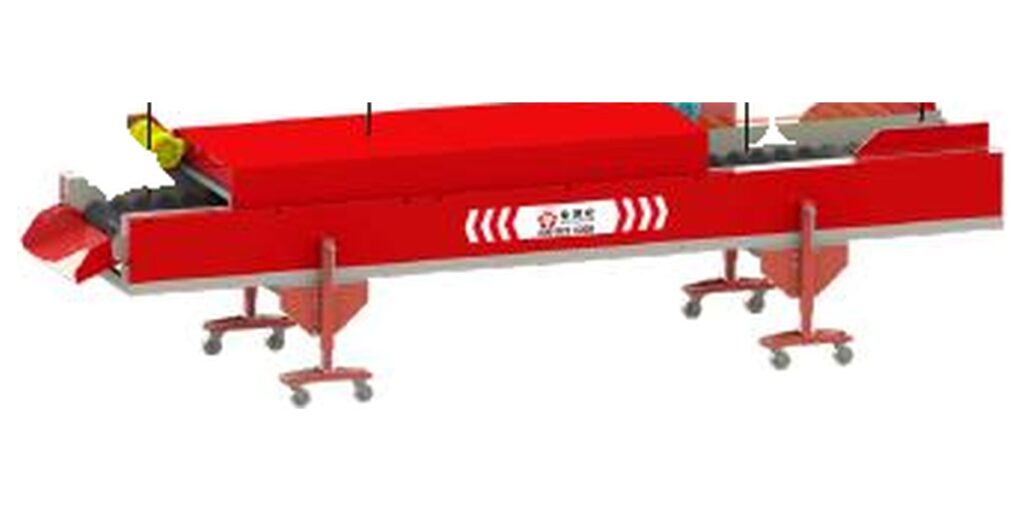
Dry brushing applies mechanical contact to detach surface soil as potatoes travel through the cleaning stage. The Potato dry cleaning machine uses rotating brushes while potatoes move forward continuously. Loose material is a logical starting condition for a dry-cleaning trial; soil that remains firmly attached may not release sufficiently within the available contact. More aggressive cleaning is not automatically better if it changes the appearance of the potato surface.
Water introduces a different removal mechanism: wetting and agitation can help loosen attached deposits, while brush contact can assist their release. The effectiveness still depends on the crop and operating conditions. Washing also moves removed soil into a wet waste stream and leaves a wet product surface to manage. Compare residual soil and handling condition together rather than assuming a visibly brighter sample proves that the whole process is suitable.
Separate a cleaning machine from a complete process route
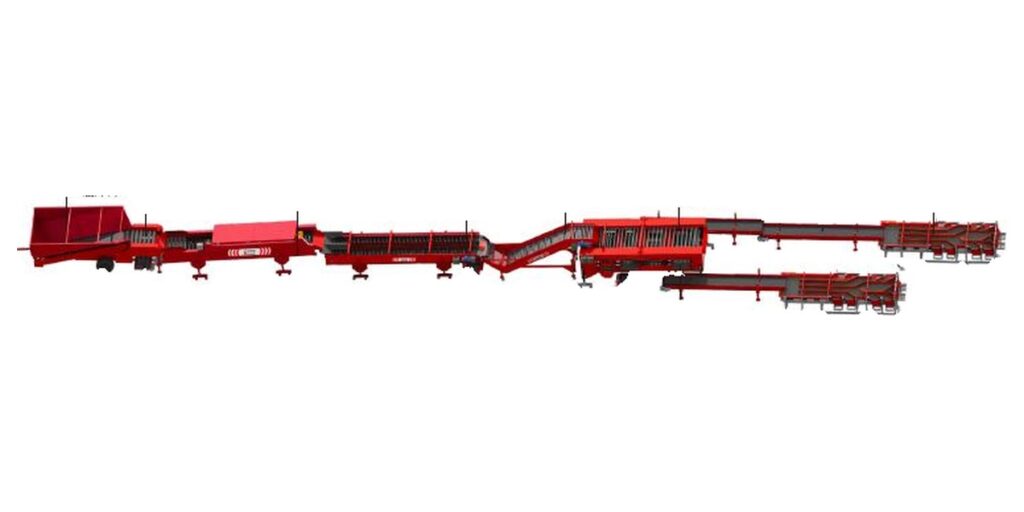
First decide whether the project needs only a cleaning stage or a receiving-to-packing arrangement. The Potato dry-cleaning sorting line combines cleaning, selection, lifting, sorting, conveying and bagging functions; its modules can be repositioned or used independently. That flexibility concerns arrangement and use. It does not establish a total line rate or prove that a particular crop will meet the buyer’s cleanliness standard.
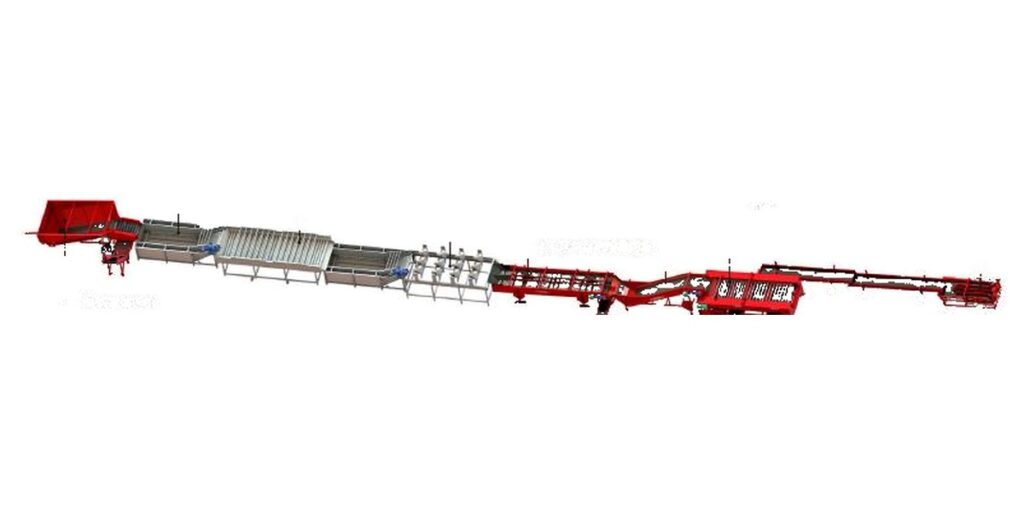
The Potato water-washing sorting solution includes washing, manual selection, mechanical sorting, conveying and bagging stages, with an approximate line length of 45 m. Water supply, utilities, layout and final capacity are configured for each project. Keep the equipment comparison separate from the cleaning decision: a published rate for an individual cleaner cannot be transferred to a complete line, and a line length is not a finished site layout.
| Product | Published capacity | Verified configuration | Selection meaning |
|---|---|---|---|
| Potato dry cleaning machine | 7-10 t/h | Long-board / short-board versions; rotating brushes; continuous forward movement | Dry cleaning before manual selection, grading or packing; versions can operate alone or in a line |
| Potato dry-cleaning sorting line | Configured to project requirements | Cleaning machine, dry cleaner, selection platform, lifter, sorting machine, conveyor and bagging machine | Bulk receiving through packing; modules can be repositioned or used independently |
| Potato water-washing sorting solution | Configured to project requirements | Cleaning machine, soil elevator, bubble washer, brush rollers, manual selection platform, lifter, mechanical sorter, conveyor and bagging machine; line length approximately 45 m | Outbound washing through bagging; water supply, utilities, layout and final capacity are project-specific |
Use essential constraints before weighted preferences
A useful matrix has two layers. The first contains essential constraints: an acceptable product result, workable water provision where required, feasible waste handling, and a route compatible with the destination. If one fails, a strong score elsewhere cannot rescue the option. The second layer compares preferences, such as presentation beyond the minimum standard, footprint implications and how much existing equipment can remain in service.
Record each entry as an observation, a requirement or a trial result. Avoid converting unknowns into neutral scores; an untested adhesion condition is still unknown. In a hypothetical example, dry brushing might satisfy a bulk buyer’s loose-soil requirement, while the same crop fails a different buyer’s presentation standard. The matrix should explain those different outcomes rather than declare one cleaning method universally superior. The following checks keep the decision tied to evidence.
| Decision factor | Dry-route check | Water-route check | Decision evidence |
|---|---|---|---|
| Soil adhesion | Does brushing release enough of the actual surface soil? | Does wet cleaning improve removal enough to meet the objective? | Matched incoming and outlet samples from representative lots |
| Destination and presentation | Does the cleaned sample meet the buyer’s visible-soil reference? | Does the washed sample meet the required appearance at dispatch? | Buyer-approved reference and observations at the destination hand-off |
| Cleaning objective | Is loose-soil removal sufficient for the next operation? | Is additional removal needed rather than merely preferred? | Written pass condition for inspection or packing |
| Water availability | Evaluate the proposed dry configuration’s utility needs separately | Can the site support the water provision required by the selected configuration? | Project-specific utility review; do not assume a consumption figure |
| Waste handling | Can detached soil be collected and removed during operation? | Can water and entrained solids be managed during operation? | Observed waste streams and a workable collection or treatment plan |
| Downstream condition | Does residual soil interfere with selection or packing? | Does surface wetness create a handling issue at the next stage? | Samples and transfer observations beyond the cleaning outlet |
Follow the removed soil beyond the cleaning stage
Cleaning does not eliminate soil; it relocates it. For a dry route, establish where detached soil will collect and how it will be removed without obstructing production or returning to the product stream. For a wet route, assess the combined burden of water and entrained solids. Settling, collection, water reuse or discharge arrangements are project engineering decisions, not implied features of the supplied washing configuration.
Check the destination of cleaned potatoes just as carefully. If they proceed directly to packing, assess surface moisture and presentation at the actual packing point. If they will be held, define a separate handling assessment for that interval rather than extrapolating from an immediate sample. Our water-wash line cleaning and lifting guide provides related planning context; the cleaning trial must still demonstrate the condition delivered to those transfers.
Compare representative crop lots under recorded conditions
Select samples that represent expected variation, including the soil conditions most likely to challenge the preferred route. Keep clearly different lots separate. Where practical, divide a lot between candidate methods so the comparison is not distorted by different starting material. Record origin, visible soil condition, potato size range, sample mass, feed conditions and the cleaning route used. Agree the sample quantity and trial duration with the project team before testing.
Observe incoming and cleaned samples under the same lighting and handling method. Record visible residual soil, deposits around surface recesses, changes in surface appearance, and wetness where applicable. Sample at the cleaning outlet and again at the intended inspection or packing point. Include the removed-soil stream in the observation record. A clean handful taken during an unusually light feed does not establish performance across the intended production condition.
Accept the operating condition, not just the best sample
Before commissioning, agree how a lot passes: the visible-soil reference, allowable handling-related appearance changes, sampling locations, production rate to be demonstrated, and the response to a failed sample. Establish limits with the buyer and project team rather than borrowing arbitrary percentages. Begin material testing under controlled feed, then evaluate the intended operating condition while checking transfers, accumulation and waste removal alongside the cleaned product.
If results deteriorate, separate crop effects from operating effects. Soil remaining on all samples suggests a different problem from cleanliness that worsens only when feed builds up. Change one operating condition at a time where adjustment is available, and record the result; do not presume an unlisted control exists. Repeat the acceptance observations after an adjustment. A successful trial supports only the crop conditions, configuration and operating range actually demonstrated.
Choose the route and define its operating limits
Select dry cleaning when trials meet the required result and the detached-soil route is workable. Select water cleaning when its demonstrated improvement is necessary for the destination and the site can support the associated water, solids and product-handling requirements. If neither candidate passes, revise the objective, configuration or crop segregation strategy. Do not hide a failed essential constraint behind a better average matrix score.
Keep a short operating envelope with the final selection: accepted crop conditions, demonstrated feed condition, inspection reference, waste-handling arrangement and triggers for reassessment. Changes in supplier, soil adhesion or destination should prompt a fresh comparison. We use these requirements to frame a project-specific arrangement through our potato handling and processing solutions, while keeping published equipment facts distinct from performance that must be demonstrated with your crop.
Discuss a crop-specific cleaning trial
Send your potato cleaning requirements to our engineering team with representative crop samples, soil-condition photographs, potato size range, destination, buyer-approved presentation reference, target hourly and shift volumes, available footprint, electrical supply, water availability, waste-handling provisions, and the planned packing or holding sequence. We can use these inputs to define the candidate route and trial acceptance conditions.
- The Potato dry cleaning machine uses rotating brushes to remove surface soil while potatoes move forward continuously.
- The Potato dry cleaning machine has a published capacity of 7-10 t/h.
- The water-washing sorting solution has a line length of approximately 45 m; water supply, utilities, layout and final capacity are configured for each project.
- Each module of the Potato dry-cleaning sorting line can be repositioned or used independently.
Frequently asked questions
Can a decision matrix replace a potato cleaning trial?
No. A matrix helps organise requirements and eliminate routes with essential constraints, but it cannot establish how your soil will release. Trial representative lots, compare cleaned samples with the buyer’s reference, and observe waste handling and downstream condition. Record the operating conditions so the result has a defined scope.
When should dry cleaning be the first route to test?
Dry cleaning is a sensible first candidate when the objective is surface-soil removal before selection, grading or packing, particularly where much of the soil is loose. It remains a candidate, not a guaranteed answer. The trial must show that residual soil and product appearance meet the destination’s requirements.
Does water washing guarantee a better packed product?
No. Washing may improve removal of attached soil, but the value depends on the required presentation and the condition delivered to packing. Assess surface wetness, residual deposits and handling-related appearance changes as well as cleanliness. Washing alone does not establish microbial performance, storage suitability or buyer acceptance.
Can the dry cleaner’s 7-10 t/h rating be used as the complete line capacity?
No. The 7-10 t/h figure applies to the individual dry-cleaning machine. The complete dry and water routes are configured to project requirements. Establish the proposed line rate separately, including selection, sorting, transfers and bagging, then demonstrate the agreed operating condition with representative crop during acceptance testing.
What should we send before requesting a cleaning-route proposal?
Send representative crop samples, soil-condition photographs, potato size range, destination and an agreed presentation reference. Include target hourly and shift volumes, available footprint, electrical supply, water availability, waste-handling provisions and the downstream packing or holding plan. These inputs help define a meaningful trial and a project-specific configuration.
Engineering note
Trial inputs and records: crop lot and soil condition, potato size range, destination, agreed visible-soil reference, tested configuration, feed condition, sample locations, downstream observations and waste-handling observations. Record the operating conditions for each candidate route so the comparison has a defined scope.
 English
 Chinese
 Spanish
 German
 French
 Russian
 Urdu
 Bengali
 Kazakh
 Ukrainian
 Dutch
 Polish