
Separate incoming potato lots when size distribution, soil burden, inspection needs or destination require different handling. A different source warrants comparison first. Lots can share equipment if their operating needs are compatible and a defined transition preserves identity.
Key takeaways
- Separate lots when their cleaning, inspection, feed conditions or destinations require different handling.
- Compare representative samples for size distribution and soil burden before choosing the arrangement.
- Use comparable trial conditions and record sampling methods, adjustments and output observations.
- Share equipment when handling needs are compatible, with defined lot boundaries and destinations for residual material.
When incoming lots need separate handling
Separate incoming potato lots when their condition or destination requires different receiving, cleaning, inspection or sorting treatment. Source and harvest period help identify material worth comparing, but neither alone establishes a need for separate processing. Keep lots identifiable during that comparison. If both lots can meet the intended destination requirements under the same operating conditions, they may use shared equipment in a defined sequence.
Separation can mean processing lots consecutively through one route, holding one lot pending a decision, or assigning different treatment routes. Choose the arrangement that addresses the observed difference. For example, a lot with more attached soil may need a different cleaning approach, while lots intended for different destinations may simply need separate discharge assignments. Define the boundary before unloading so observations and output can be associated with the correct lot.
- Identify the source and lot before unloading.
- Compare size distribution and visible soil burden.
- Confirm the intended storage or packing destination.
Identify the difference that affects handling
Compare representative samples for size range, attached soil, stones, plant material and visible damage. Take samples from more than one part of the delivery where practical, and record how they were selected. Describe each characteristic separately so a broad quality label does not hide the handling issue. Size mix can change piece count and presentation at a given mass feed rate; observe spacing and overlap before deciding whether a feed adjustment is needed.
Check soil condition before and after cleaning, using the same observation method for each lot. If one lot needs a different treatment or feed setting, mixing it with cleaner material can obscure that need. Record whether the difference persists through the intended route and affects inspection or the destination requirement. The guide to sizing a potato cleaning intake line helps connect these observations with receiving and cleaning duties.
Preserve identity through receiving
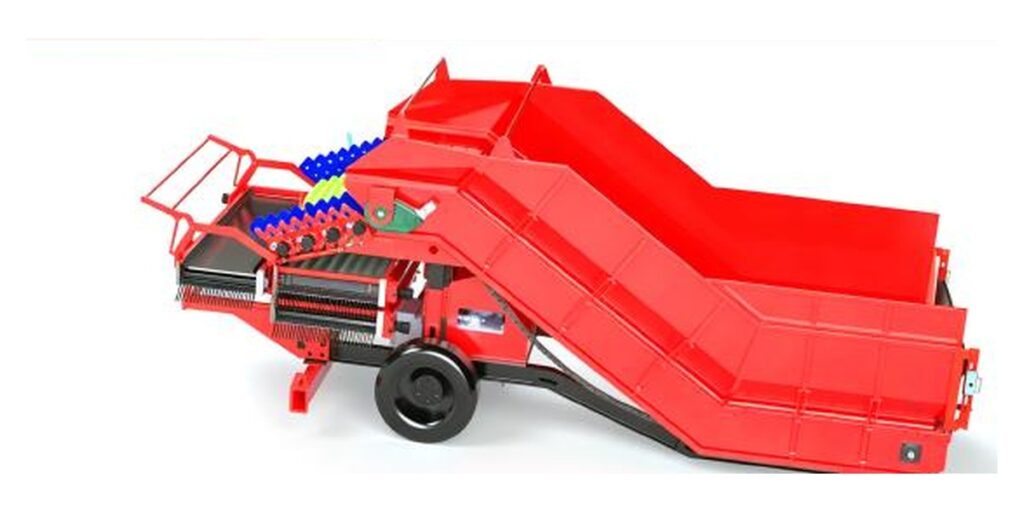
The ton-bag receiving and storage line combines cleaning, picking, lifting, reversible conveying and hydraulic buffer filling for harvest-site use and warehouse intake. Reversible conveying supports continuous bag filling. Its capacity is configured to project requirements, so specify the intended flow, lot sequence and receiving duty when discussing the arrangement. Continuous filling still requires an operating procedure for identifying when one lot ends and the next begins.
Plan where each lot waits and how its identity follows transfer into storage or onward processing. Labels, operator handovers and transition records are procedural choices that the site must define. Include a destination for residual material present during a changeover, especially where a conveyor or intermediate stage retains potatoes. If holding space is needed, specify its required role separately in the layout and keep held material identifiable until its treatment or destination is decided.
- Define the boundary between successive lots.
- Keep identification available at each handover.
- Assign a destination for held material.
| Lot condition or requirement | Handling choice | What to define |
|---|---|---|
| Cleaning and inspection needs are compatible, but identity must be retained | Process consecutively through shared equipment | Lot boundary, clearance procedure and discharge identification |
| Handling needs or destination remain undecided | Hold the lot separately pending assessment | Identified holding location, decision owner and release criteria |
| Cleaning, feed conditions or destination require different handling | Use different settings in sequence or a separately configured route | Treatment steps, transition procedure, destination and project flow |
Compare lots at the inspection point
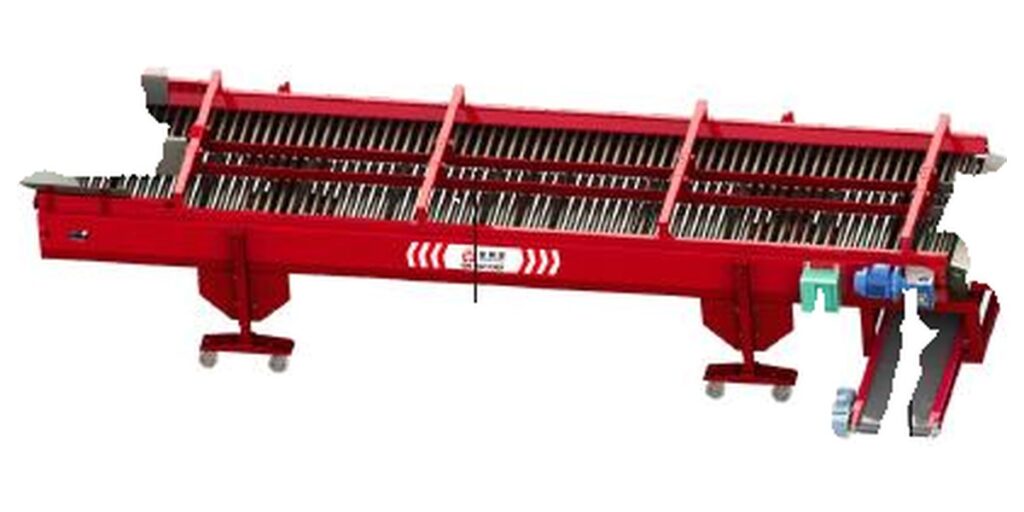
The potato selection platform uses chain-driven stainless rollers. Friction rotates each potato through 360 degrees while workers remove bad potatoes to the central waste channel. During a lot comparison, observe whether surfaces remain visible and whether workers can apply the agreed removal criteria at the proposed feed condition. Note overlap, uneven distribution and interruptions because these conditions can affect what workers have an opportunity to inspect.
Use the same sampling basis and inspection criteria for each lot, recording feed rate and operator allocation. If comparing reject quantities, state whether the result is a count or a mass and relate it to the corresponding inspected quantity. Different results may reflect crop differences or changed inspection conditions. Repeat an affected comparison after a setting or staffing change, and retain the earlier observation in the trial log so the reason for the change remains clear.
Choose shared flow or separate treatment
Shared equipment is practical when cleaning needs, inspection conditions and destinations are compatible. Sequential handling can preserve identity even when both lots use the same settings. Separate treatment becomes useful when a lot needs different cleaning, feed control or a distinct destination. Holding a lot is appropriate when the available observations do not yet support a decision. Set out the reason for each choice so operators know which difference the arrangement must accommodate.
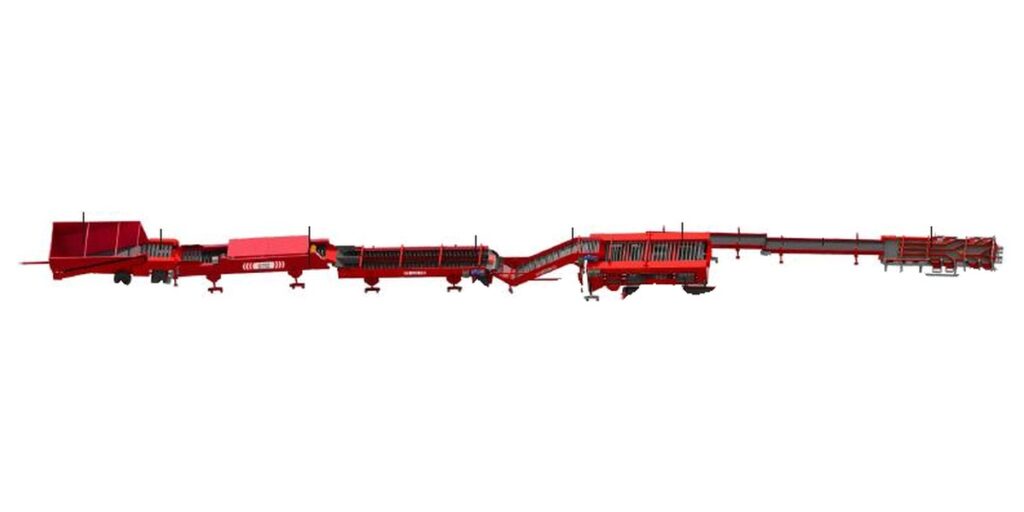
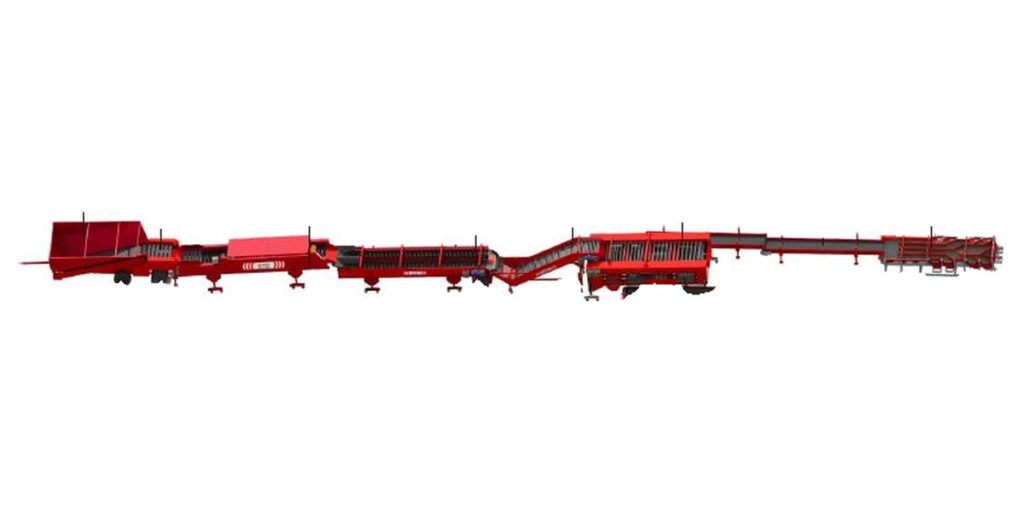
The inbound and outbound sorting line can handle bulk or stored potatoes before storage or direct packing, and its links can operate independently. Independent operation alone does not establish simultaneous separate routes; their feasibility depends on the project arrangement. Use the modular-line planning guide to review stage connections and potato processing solutions to consider the required duties. Define how material reaches each selected stage and where it leaves the route.
Trial representative lots under comparable conditions
Choose a stated trial quantity or sampling basis for each lot and explain how it represents the delivery. Confirm the route and destination, then observe receiving, cleaning, inspection, transfers and discharge. Start with comparable conditions and change one variable at a time where practical. Where equal conditions are unsuitable for a particular lot, record the reason and evaluate that lot under its proposed operating conditions rather than treating the trials as directly equivalent.
Agree acceptance criteria for the intended destination before interpreting results. These can include the site’s requirements for visible soil after cleaning, inspection presentation and separation at discharge, without assuming a universal threshold. Record adjustments and repeat the affected comparison. The trial log should explain whether the lots can share settings, need a controlled transition or require different treatment. It should identify held material and assign responsibility for deciding when that material can proceed.
- State the quantity or sampling basis.
- Record feed conditions and operator allocation.
- Log interruptions and setting changes.
- Associate output observations with lot identity.
Locate the constraint before changing the layout
A backup at receiving can arise from the release sequence or a downstream restriction. Poor inspection visibility can arise from soil, overlapping potatoes or unsuitable feed distribution. Locate where the symptom first appears and check what happens immediately upstream and downstream. Record whether the issue occurs throughout a lot or only during unloading surges and changeovers. This distinction helps determine whether the response should address crop condition, feed management or the transfer arrangement.
The diagnostic table links repeated observations to handling choices. Compare lots under comparable conditions and inspect adjacent stages together. If the symptom persists across lots, review the transfer or operating arrangement. If it follows one lot, test the handling change that addresses its specific condition. Repeat the observation after the change and check the discharge as well as the problem point, so an improvement at one stage does not conceal a restriction farther along the route.
| Observation | Compare | Handling response |
|---|---|---|
| Poor inspection visibility | Soil and presentation under comparable feed conditions | Trial different cleaning or feed conditions for the affected lot. |
| Transfer accumulation | Lot size mix, release sequence and downstream restriction | Review the interface; separate handling if the issue follows the lot. |
| Different reject quantities | Sampling basis, criteria and operator allocation | Keep results separate while confirming the cause. |
| Consistent handling across lots | Repeated samples and intended destinations | Use shared equipment with a defined lot transition. |
Specify the project and transition requirements
The selection platform is rated at 5–15 tonnes per hour, with a stated power rating of 0.8 kW and voltage of 220 V. Its component rating does not establish configured-line capacity or inspection suitability for every lot. Receiving and integrated-line capacity must be defined for the project. Discuss the proposed lot conditions, staffing and stage connections together when assessing the required flow; combining component ratings does not produce a reliable assembled-line capacity.
Include target flow, lot sequence, holding needs, destinations, available footprint and acceptance criteria in the project brief. Have a qualified local professional review electrical requirements. Define how the route is cleared or residual material handled between lots; elapsed time alone cannot confirm that the preceding lot has left every stage. Assign responsibility for confirming the transition, recording any mixed material and authorizing the next lot. These operating decisions make the chosen arrangement usable during routine intake.
Discuss your potato lot-separation requirement
Send crop sample details, size distribution, soil burden, target flow, lot sequence, destinations and available footprint through the potato processing project contact page to discuss a practical receiving and separation arrangement.
- The selection platform is rated at 5–15 t/h.
- Chain-driven stainless rollers rotate potatoes through 360 degrees for manual inspection.
- The ton-bag receiving and storage line includes reversible conveying and hydraulic buffer filling.
- The inbound and outbound sorting line can be configured for bulk or stored potatoes, and its links can operate independently.
Frequently asked questions
When should incoming potato lots be separated?
Separate them when cleaning, inspection, feed control or destination requires different handling. Preserve identity during the comparison.
Does a different source require separate processing?
A different source warrants comparison. Representative samples and handling observations determine whether separate treatment is needed.
Can one receiving line handle several lots?
Yes, if its project configuration supports the required flow and transitions. Define how each lot is identified and where residual material goes.
What belongs in the trial log?
Record lot identity, sample quantity, size mix, soil burden, feed conditions, route, operators, adjustments and output observations.
Does the selection platform rating establish line capacity?
No. Its 5–15 t/h rating applies to that component. Configured-line capacity and workable inspection conditions require project-specific assessment.
Engineering note
Keep trial logs with lot identities, sampling methods, operating conditions and destination decisions so operators can review why shared or separate handling was chosen.
 English
 Chinese
 Spanish
 German
 French
 Russian
 Urdu
 Bengali
 Kazakh
 Ukrainian
 Dutch
 Polish