
Dry cleaning suits potatoes needing surface-soil removal before selection, grading or packing when water use is undesirable. Water washing suits outbound lines where washing, inspection, grading and bagging are required. The correct choice depends on soil adhesion, skin condition, feed stability, site utilities and the acceptance test, not capacity alone.
Key takeaways
- Select the process from crop condition and destination, not capacity alone.
- Dry brushing removes surface soil but is not equivalent to water washing.
- Treat the approximate 45 m wash-line length as a planning input, not a capacity statement.
- Accept the route only after a representative crop trial records soil removal, skin condition and flow stability.
Choose the Process Before the Layout
The first decision is not which cleaner has the largest stated capacity. It is whether the crop needs surface soil removed while remaining dry, or whether the destination requires a washing, inspection, grading and bagging sequence. A dry module can be the better fit for potatoes moving toward manual selection, grading or packing. A water-washing solution is a different process choice for outbound preparation, because it introduces washing stages, water handling and a longer configured line.
Start with the condition of the potatoes at intake and the condition required at the next hand-off. Ask whether the soil is loose and dusty, damp and adhesive, or packed into surface irregularities. Record whether the skin is firm, tender, scuffed or already damaged. These observations determine how much brushing the crop can tolerate and whether a dry process can deliver the required visual result. Our guide to modular dry-cleaning layouts is useful when the process must remain compact and accessible.
What Dry Brushing Can and Cannot Do
Dry cleaning removes surface soil through contact between rotating brushes and the potato while the product moves forward continuously. The mechanism is direct: brush contact loosens soil attached to the outer surface, and continued movement carries the product toward the next operation. The result depends on the soil bond, crop geometry, loading pattern and the amount of contact each potato receives.
This process should be treated as soil removal, not as washing. Strongly adhered wet soil, soil retained in deep features or material that requires rinsing may remain after brushing. Increasing contact indiscriminately can also create a poor operating trade-off for delicate skins. A commissioning trial should therefore compare soil removal with visible skin condition at the same feed condition, rather than accepting cleanliness as a single subjective observation.
- Separate loose surface soil from damp or strongly adhered soil in the crop description.
- Inspect representative potatoes before and after brushing for remaining soil and visible skin scuffing.
- Confirm whether the following operation accepts a dry product and dry soil discharge.
Where a Mobile Intake Module Fits
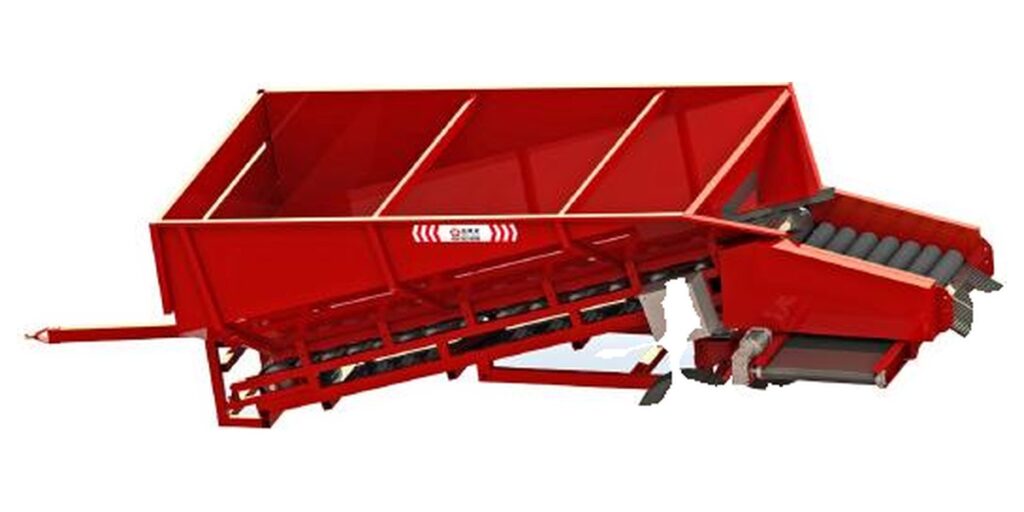
A mobile intake cleaner is intended for field intake, bulk and ton-bag receiving, and soil removal. Its effective belt, rubber cleaning rollers, tow bar and adjustable connection height address a different operating problem from a fixed wash line: receiving variable loads and connecting the soil-removal step to different line positions. Mobility may simplify seasonal receiving arrangements, but it does not turn the module into a water washer.
The practical question is whether the incoming load can be presented consistently enough for the rollers and downstream equipment. Check the hopper loading method, inlet and outlet heights, transfer direction and available turning space. The stated hopper volume is about 3 m³, while the inlet and outlet heights are adjustable within their specified ranges. These dimensions help assess connection points, but they do not establish the capacity of every downstream machine or the final line rate.
When Water Washing Is the Right Process
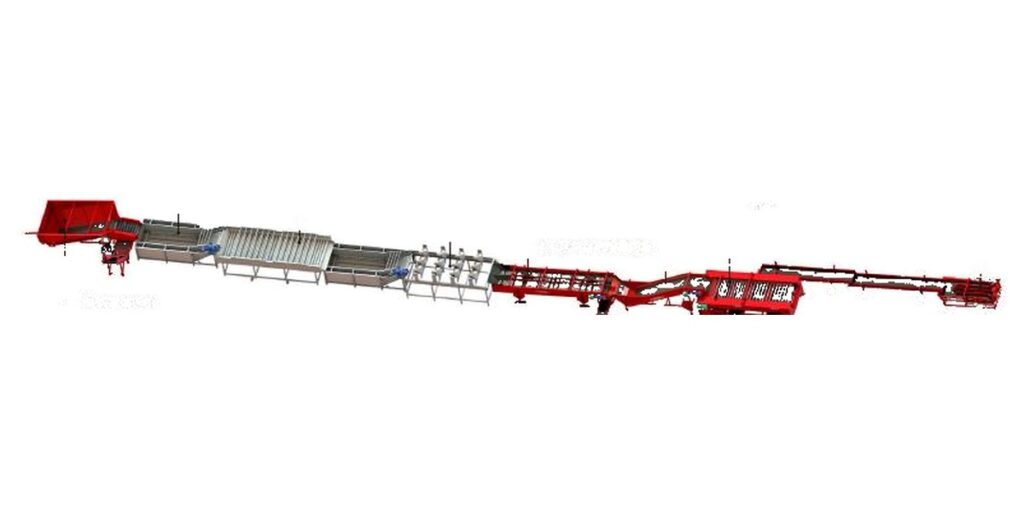
Water washing becomes relevant when the outbound product must pass through a sequence that includes washing, inspection, grading and bagging. The water-washing sorting solution includes a cleaning machine, soil elevator, bubble washer, brush rollers, manual selection platform, lifter, mechanical sorter, conveyor and bagging machine. Those stages create a process chain rather than a single cleaning operation.
The line is configured to project requirements and has an approximate length of 45 m. That figure is a layout indication, not a universal production rating. Water supply, utilities, final capacity and the arrangement of components are project-specific. Before selecting this route, confirm where water is available, how the site will handle dirty water and soil, how operators will access inspection points, and whether the destination justifies the added process complexity. See our water-wash line guide for the relationship between cleaning, lifting and inspection.
- Define the water source, operating availability and discharge approach before fixing the line arrangement.
- Allow access for inspection, cleaning and maintenance around the washing and selection stages.
- Treat the approximate 45 m line length as a planning input, not as a complete site footprint.
Compare the Cleaning Options
The equipment specifications show three distinct configuration directions. The dry-cleaning machine provides long-board and short-board versions for standalone use or line integration. The mobile cleaner is aimed at receiving and bulk handling, with adjustable connection heights. The water-washing solution combines several process stages and leaves final capacity and utilities to the project configuration.
These distinctions matter at the hand-off. A dry module may be selected because the next step is manual selection, grading or packing. A mobile module may be selected because the intake point changes or bulk receiving is central to the operation. A water-washing solution may be selected because outbound preparation requires washing and subsequent classification. Capacity values should be read as equipment specifications, not as proof that unlike process routes are interchangeable.
| Product | Specification | Process role | Engineering meaning |
|---|---|---|---|
| Potato dry cleaning machine | Long-board / short-board versions; 7-10 t/h; 1.7 kW; 220 V | Dry surface-soil removal before manual selection, grading or packing | A dry module for a defined upstream cleaning step, with two board-length options |
| Mobile potato cleaning machine | Approximately 15 t/h; 1.75 kW; 220 V; hopper about 3 m³ | Field intake; bulk and ton-bag receiving; soil removal | A receiving-oriented mobile module, not a water-washing line |
| Potato water-washing sorting solution | Configured to project requirements; line length approximately 45 m | Outbound washing, sorting, grading and bagging | A multi-stage project solution whose final capacity and utilities require configuration |
Configure Around the Operating Problem
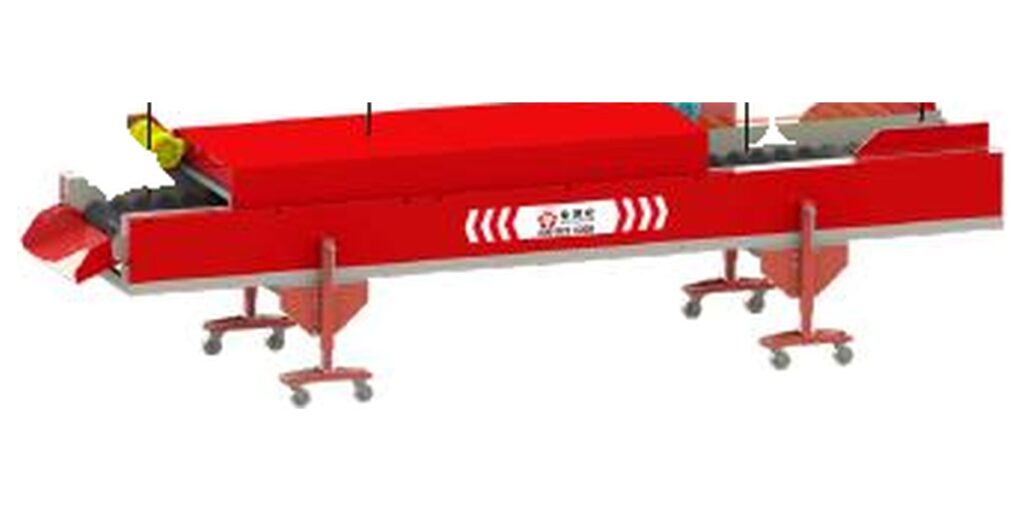
For a dry route, choose between the long-board and short-board dry-cleaner configurations after mapping the available footprint, transfer heights and required access. The long board is listed at 5300 × 1550 × 1350 mm, while the short board is listed at 3800 × 1550 × 1350 mm; both have adjustable height from 1350 to 1700 mm. The choice is therefore partly spatial and about accommodating the available machine length and transfer path; performance must be evaluated with the intended crop.
For receiving, check whether the mobile intake cleaner’s 4200 × 1950 × 1450 mm envelope and adjustable height from 1450 to 1750 mm suit the site. Confirm the tow path, hopper loading method and downstream alignment before committing to a mobile arrangement. For washing, define the process boundary first: receiving, soil removal, washing, inspection, grading and bagging. Then set the footprint, operator positions, utilities and discharge routes around that boundary rather than treating the approximate line length as the only layout constraint.
- Record crop source, soil type, moisture condition and size range for the trial material.
- Measure receiving and discharge elevations, access aisles, turning space and service clearances.
- State the required destination condition: dry soil removal, washed product, inspected product or graded and bagged product.
Use a Crop Trial and Acceptance Method
A useful trial begins with a representative crop sample, not a clean demonstration batch. Divide the sample across the conditions that matter in production: loose soil, adhesive soil, different skin conditions and the expected size range. Feed each condition through the proposed process at a recorded operating setting. Collect the incoming and outgoing material separately so the comparison is based on the same crop condition.
For dry cleaning, inspect remaining visible soil, skin appearance, accumulation at transfers and the stability of product flow. For water washing, record the same crop observations and add water availability, soil removal from the washing stages, operator access and the condition of the inspection stream. The acceptance record should identify the sample, feed condition, process route, observed limits and the party responsible for accepting the result. Cleaning alone cannot guarantee that potatoes are suitable for storage.
Diagnose Failures by Their Pattern
If loose soil remains after a dry pass, first check whether the crop is being presented evenly and whether soil is unusually damp or adhesive. If soil removal is acceptable but skin scuffing increases, the operating balance is unsuitable for that crop condition and should not be corrected simply by adding more contact. If flow becomes unstable, inspect loading, bridging, transfer elevations and accumulation before attributing the problem to nominal capacity.
In a water-washing route, poor results can arise from an incomplete process boundary rather than from the washer alone. Insufficient space around manual selection, unclear soil and water discharge paths, or an unsuitable connection between the lifter and sorter can reduce practical performance. The diagnostic matrix below separates crop, process and site causes so the acceptance decision does not rely on one visual check.
| Observed result | First checks | Likely decision point | Acceptance evidence |
|---|---|---|---|
| Loose soil remains after dry cleaning | Feed distribution, crop moisture, brush contact and transfer buildup | Decide whether the soil is suitable for dry removal or needs washing | Before-and-after sample photographs and recorded crop condition |
| Skin appearance worsens during brushing | Crop skin condition, loading depth and operating balance | Reduce unsuitable contact or reconsider the process route | Representative sample inspection at the agreed operating condition |
| Flow is unstable at receiving | Hopper loading, bridging, inlet height and discharge alignment | Review receiving configuration before changing nominal capacity assumptions | Observed feed stability and recorded interruptions during the trial |
| Washed line cannot be arranged cleanly | Water supply, discharge path, access aisles and inspection positions | Rework the project layout or define a smaller process boundary | Marked layout, utility points and operator access review |
Make the Selection With Project Data
Choose dry cleaning when the main requirement is surface-soil removal before manual selection, grading or packing and the crop trial shows acceptable soil removal without unacceptable visible skin damage. Choose a mobile intake arrangement when receiving flexibility, bulk intake or ton-bag handling is central to the site. Choose water washing when washing is an explicit outbound requirement and the project can support the associated utilities, layout and inspection sequence.
Before we prepare a final arrangement, send crop samples or representative crop information together with the target flow, soil condition, destination, available footprint, receiving elevations and water and discharge constraints. Our potato processing solutions can then be reviewed against the actual process boundary. For a project discussion, use the engineering contact form for a crop and operating review and include the proposed acceptance method.
Review Your Potato Cleaning Route
Send a representative crop sample or clear crop-condition details, target flow, soil and moisture condition, potato size range, destination, available footprint, receiving and discharge elevations, water supply and discharge constraints, and your proposed acceptance checks through the potato cleaning project contact form.
- The potato dry cleaning machine is listed at 7-10 t/h, with 1.7 kW power and 220 V voltage.
- The mobile potato cleaning machine is listed at approximately 15 t/h, with 1.75 kW power and 220 V voltage.
- The potato water-washing sorting solution has an approximate line length of 45 m and is configured to project requirements.
Frequently asked questions
Is dry cleaning the same as potato water washing?
No. Dry cleaning uses rotating brushes to remove surface soil while potatoes move forward. Water washing is a configured multi-stage solution that includes washing, inspection, grading and bagging. A dry cleaner should not be specified as a substitute for a process that requires washed outbound product.
When is a dry potato cleaner the better choice?
Dry cleaning is generally the appropriate process direction when the requirement is surface-soil removal before manual selection, grading or packing and the product should remain dry. The crop trial must still check soil adhesion, skin condition, feed stability and the visible result at the intended operating condition.
Does the mobile cleaner provide water washing?
No. The mobile cleaner is recorded for field intake, bulk and ton-bag receiving, and soil removal. Its adjustable height and tow bar support receiving and line connections, but the equipment specification does not describe it as a water-washing machine or as a complete washing solution.
Does the water-washing solution have a fixed capacity?
No fixed capacity is specified for this solution. It is configured to project requirements, and the component and total line capacities are confirmed for the selected configuration. Water supply, utilities, layout and final capacity must therefore be defined as part of the project.
What should be included in a potato cleaning acceptance trial?
Use representative crop samples covering the expected soil, moisture, size and skin conditions. Record the process route, feed condition and observed flow. Check soil remaining, visible skin condition, transfer behavior and operator access, then document the agreed limits. Cleaning results alone cannot guarantee suitability for storage.
Engineering note
Final selection depends on representative crop condition, destination, site utilities, access and the selected process boundary. Acceptance should use an agreed crop trial with recorded observations and limits before the final layout is fixed.
 English
 Chinese
 Spanish
 German
 French
 Russian
 Urdu
 Bengali
 Kazakh
 Ukrainian
 Dutch
 Polish