
Repeatable French fries color testing requires samples taken at the same processing stage, a recorded preparation method, consistent handling and an agreed color decision reference. Repeat inspection of the same material helps assess measurement variation; independently collected samples reveal sampling variation. Keep inspection settings traceable, and evaluate sample handling separately from production line throughput.
Key takeaways
- Compare samples from the same processing stage with recorded preparation and timing.
- Keep the color reference and inspection settings traceable across result series.
- Separate repeated inspection of retained material from independently collected samples.
- Evaluate sample capacity and detection efficiency separately from production line throughput.
When a color change may be a sampling change
A French fries color report is useful only when the next report represents a comparable sample. If one operator collects freshly prepared strips and another collects material after a different holding period, their results can differ even when the production process has not meaningfully changed. The operating problem is deciding whether an observed shift belongs to the product or to the way it was selected, prepared and presented for inspection.
We recommend defining the decision before defining the sampling routine. A lot comparison, a process adjustment and a customer acceptance check may require different sampling schedules, but each needs a stable basis for comparison. Record the processing stage, lot identity, collection time and preparation history alongside the result. A color grade without that context can describe the inspected pieces while providing weak evidence about the wider lot.
Fix the processing stage and preparation condition
Choose one collection point for each comparison series and describe it precisely enough that another operator can use it. Material before final preparation and material after final preparation should have separate records. When samples require frying or another preparation step, use an agreed procedure appropriate to the product and record the actual conditions. Different recipes can change appearance, so a shared inspection method cannot compensate for uncontrolled preparation.
Include the sample’s origin time, preparation time and inspection time. Record relevant handling conditions, including any cooling, draining, holding or surface treatment applied before inspection. Establish a consistent interval or agreed window between preparation and measurement, then check departures before interpreting a trend. Our guide to French fries quality, color and powder tests helps place visual inspection within a broader testing plan while keeping the purpose of each test distinct.
Agree what the color decision means
Color inspection turns observed appearance into a decision using a reference and classification rules. Those rules need to address the buyer’s actual question: overall color grade, uneven appearance, localized discoloration or another defined visual defect. Agree the reference examples and treatment of borderline pieces before the trial. Also specify whether the report counts pieces in each category, records multiple defects on one piece or assigns a single final classification.
Keep the reference identification and inspection settings with every comparison series. Camera viewing conditions, illumination and presentation can influence visual measurements; evaluate their consistency during the trial without assuming that any particular adjustment or logging feature is included. Where the proposed equipment allows settings to change, record the changes through available controls or an external trial sheet. A revised decision reference starts a new comparison basis unless its relationship to the earlier reference has been demonstrated.
Choose inspection scope before comparing sample capacity
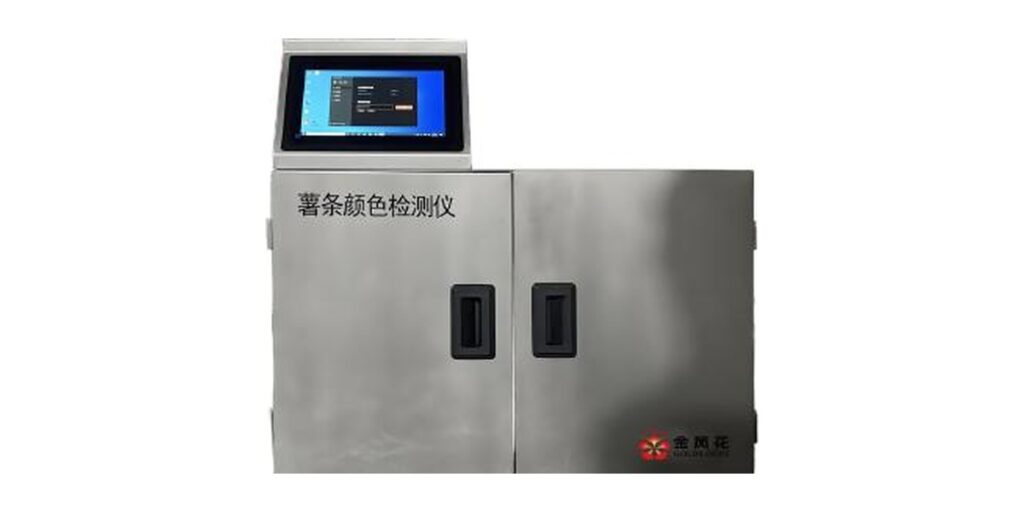
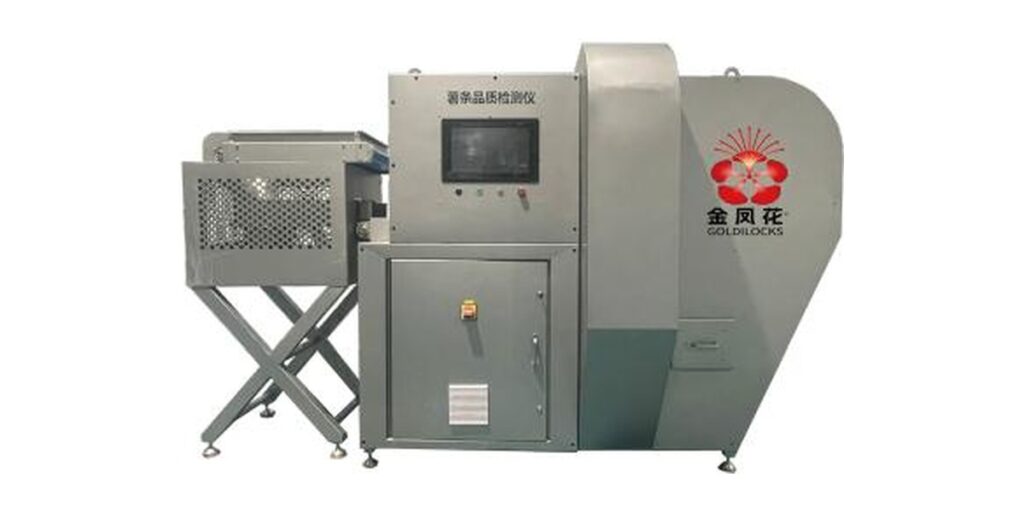
The French Fries Color Detector ATV-F-100 automatically detects French fries color grade and non-conforming products such as flower strips and sugar ends. Its multi-vision and large-model technology identifies contour, color and uniformity. The French Fries Quality Detector ATV-F-X uses multi-angle cameras and a large model to identify color, defects, length, quantity, thin film, adhesion, breakage and green heads; its stated scope also includes potato chips, potato cakes and corrugated potato production lines.
Choose between these inspection scopes by listing the decisions the sample report must support. A color-focused assessment and a broader visual quality assessment require different reference labels and acceptance evidence. The effective volumes use different bases: pieces for one detector and mass for the other. They cannot be compared directly without knowing the sample’s piece count and mass distribution. Treat the stated detection efficiency as an inspection specification; it does not establish whole production line throughput in t/h.
| Parameter | ATV-F-100 | ATV-F-X | Meaning for selection |
|---|---|---|---|
| Effective volume and detection efficiency | 100 pieces effective volume | 2 kg effective volume; detection efficiency up to 600 pieces/min | Piece count, sample mass and inspection rate describe different quantities; none establishes production line t/h. |
| Visual identification scope | Contour, color and uniformity; French fries color grade and non-conforming products such as flower strips and sugar ends | Color, defects, length, quantity, thin film, adhesion, breakage and green heads | Match the required reference labels and reporting decisions to the stated inspection scope. |
| Power | 0.5 kW | 1.5 kW | Use the stated power in the equipment review; it does not quantify energy per sample. |
| Voltage | AC220V/50Hz | AC220V/50Hz | Both detectors specify the same electrical supply. |
| Dimensions | 960 × 730 × 914 mm | 2618 × 1204 × 1573 mm | Use these dimensions for initial space planning; operating access requires a separate layout review. |
Make the sampling routine represent the decision
A consistent sample size does not automatically produce a representative sample. Selecting only easily reached, intact or similarly colored strips can bias the result. Define where and when material is collected, and take increments across the production interval relevant to the decision. Keep the collection method unchanged during a comparison. If different production periods are combined, retain their identities so an unusual interval can be investigated instead of disappearing into an average.
Record both mass and piece count when they are useful to the trial, even if the equipment’s effective volume is expressed using only one of them. Distinguish collected pieces, presented pieces and pieces with usable inspection results. Agree how fragments, overlapping pieces and material outside the chosen product definition will be treated. Review the sample’s relationship to your process through our potato processing solutions, with the inspection task and sampling interval stated separately from the line’s production target.
Use repeat inspection and fresh sampling for different questions
Repeat inspection of the same retained sample tests whether the inspection procedure gives consistent decisions under the agreed conditions. Independently collecting another sample tests a broader combination of product variation and sampling variation. Run both exercises during commissioning, and keep their results separate. Repeating the same material alone cannot establish that a routine sample represents the lot; fresh samples alone cannot isolate the inspection procedure’s contribution to disagreement.
In a hypothetical trial, two inspections of one retained sample agree closely, while samples collected at different times show different color distributions. That pattern directs attention toward production variation or collection timing. If repeated inspection of the retained material disagrees, first examine presentation, holding history and settings. Retained food samples may change during the exercise, so record elapsed time and avoid attributing every difference to the detector. Use the diagnostic matrix to choose the next controlled comparison.
| Observed pattern | Controlled comparison | Record | Interpretation limit |
|---|---|---|---|
| The same retained sample receives different classifications | Repeat inspection with unchanged reference and settings; document presentation each time | Piece identity where practical, category decisions, elapsed time and handling | Sample change and presentation variation can contribute; disagreement alone does not identify the cause. |
| Repeat inspection is consistent, but fresh samples differ | Collect separate samples from the same defined stage using the agreed schedule | Collection times, lot identities, mass, piece count and preparation history | Investigate collection and product variation before attributing differences to inspection. |
| Disagreement concentrates near a color boundary | Review borderline pieces against the agreed reference | Reference decisions, disputed labels and applicable classification rule | An unclear boundary can create disagreement even when viewing conditions are consistent. |
| Results change after preparation or holding changes | Compare matched material under the previous and revised procedures | Actual preparation conditions and preparation-to-inspection interval | Do not combine the two result series until their comparability has been assessed. |
| The overall agreement looks acceptable, but one defect performs poorly | Review results separately for each agreed defect category | Reference category counts and detector disagreements | Overall agreement can conceal weak evidence for an uncommon category. |
Accept the method using labeled samples and recorded conditions
Prepare an acceptance set that includes the expected product range, relevant defects and borderline color examples. Establish reference decisions through an agreed review method before evaluating detector results. Record disagreements by category so a high overall agreement does not hide poor performance on an important, uncommon defect. The acceptance protocol should define sample composition, repeat runs, handling conditions and the rule for resolving disputed reference labels.
Agree numerical acceptance criteria with the buyer before testing; this article does not supply a universal tolerance. Evaluate the stated inspection efficiency separately, recording sample mass, piece count, presentation conditions and elapsed time for a defined task. Include loading, preparation and reporting time when estimating operator workload. Our AI vision potato processing procurement checklist provides related questions for defining inspection scope and the evidence needed for a purchase decision.
Keep visual findings within their evidence
Visual color and defect findings describe the appearance inspected under the recorded conditions. They do not directly measure sugar concentration, establish acrylamide content or replace a separate chemical test. Even a defect label containing the word sugar remains a visual classification in this context. If a purchasing decision requires chemical information, specify the relevant independent test and connect its sample identity to the visual record without treating the two results as interchangeable.
For routine operation, retain the sampling procedure, reference identification, settings record and acceptance report together. When preparation, product format or the decision reference changes, run a controlled comparison before joining new results to an existing trend. A useful report lets the reader distinguish changes in product appearance from changes in measurement conditions. We can review that inspection task with your sample materials and operating requirements to define a suitable equipment evaluation.
Define your French fries sampling and acceptance trial
Discuss a French fries inspection trial with our engineering team. Send representative crop and prepared-product samples, product format and size range, collection stage, preparation procedure, holding interval, required color and defect decisions, sample mass and piece count, sampling frequency, production target and proposed acceptance criteria.
- ATV-F-100: 100 pieces effective volume.
- ATV-F-X: 2 kg effective volume; detection efficiency up to 600 pieces/min.
- ATV-F-100: 0.5 kW; AC220V/50Hz.
- ATV-F-X: 1.5 kW; AC220V/50Hz.
Frequently asked questions
Can 100 pieces effective volume be compared directly with 2 kg effective volume?
These specifications express sample volume on different bases. A direct comparison requires the actual mass and piece count of the intended product sample, including its size distribution and treatment of fragments. Use representative material to evaluate the required inspection task, and keep sample volume separate from detection efficiency.
Does detection efficiency up to 600 pieces/min establish production line capacity?
The stated detection efficiency describes a piece-based inspection rate. It does not establish whole production line throughput in t/h. A practical workload assessment also needs sample mass, piece count, collection frequency, preparation, loading and reporting time. Evaluate the rate under agreed trial conditions for the intended product.
Should we inspect the same sample twice or collect a second sample?
Use both methods for different purposes. Inspecting retained material again helps assess consistency of the inspection procedure, provided handling and elapsed time are recorded. Collecting a fresh sample includes product and sampling variation. Keeping those results separate helps determine whether disagreement warrants an inspection review or a closer look at collection conditions.
What preparation details should accompany a French fries color result?
Record the collection stage, lot identity, origin time, preparation procedure and actual preparation conditions. Include preparation and inspection times, plus relevant cooling, draining, holding or surface treatment. Use a consistent preparation-to-inspection interval or agreed window so differences in appearance can be interpreted against comparable handling conditions.
Can a visual sugar-end classification replace chemical testing?
A visual sugar-end classification identifies appearance within the detector's stated inspection scope. It does not provide a sugar concentration or establish acrylamide content. If a decision requires chemical information, use a separately specified test and maintain matching sample identities so visual and chemical findings can be reviewed together without treating them as equivalent.
Engineering note
Project conditions should define the product format, collection stage, preparation procedure, decision reference and inspection workload. Acceptance should use representative labeled samples, recorded settings and separate assessments of repeat inspection, fresh sampling and inspection efficiency.
 English
 Chinese
 Spanish
 German
 French
 Russian
 Urdu
 Bengali
 Kazakh
 Ukrainian
 Dutch
 Polish