
Check a potato conveyor transfer by measuring the actual release and receiving surfaces, then observing the landing point under controlled feed. Nominal height overlap is only a layout screening tool. Adjust geometry and relative belt speed separately, watch for accumulation, and compare matched crop samples for immediate injury and damage detected later. No universal safe drop height applies.
Key takeaways
- Measure working surfaces and the actual landing point, not overall machine height.
- Treat nominal height overlap and similar capacity ratings as screening information only.
- Correct obstructed geometry before using speed to address accumulation.
- Accept a tested operating window with separate immediate and later damage assessments.
Start with the landing point, not the capacity label
When potatoes pile up between conveyors, increasing belt speed may move the problem rather than solve it. The receiving belt might be carrying material away too slowly, but potatoes may also be striking an edge, landing outside the usable belt area or arriving in intermittent surges. Treat the transfer as a small process with an entry, a landing zone and an exit. Watch where the first layer lands and where subsequent potatoes begin to collect.
Define the operating problem before adjusting anything: accumulation during steady feed, bouncing at low load, spill during a surge or visible injury after transfer. Record crop size range, surface condition and incoming damage alongside the intended feed rate. A transfer that appears satisfactory with a sparse stream may behave differently with a deeper bed. We recommend investigating one hand-off at a time so that changes elsewhere do not obscure the cause.
Measure release and receiving surfaces from one datum
With equipment isolated under the site’s procedure, measure both interfaces from a common datum. Record the upstream belt surface at release, the downstream surface at the expected landing point, the horizontal gap and the lateral alignment. Also record any intervening edge or guide that could become the first contact surface. Overall machine height is not a substitute for these measurements: the potato travels between working surfaces, not between frame tops.
The vertical difference is a useful starting measurement, but it is not necessarily the complete free-fall distance. Belt slope, the discharge position and the receiving incline can change where contact occurs. Sketch the side profile and mark the expected path without presenting it as a precise trajectory prediction. After installation, verify the sketch against loaded observations from a permitted viewing position. The guide to gentle potato handling and conveyor design provides broader context for reducing abrupt changes in the product path.
Use nominal height overlap to screen an interface
The BSSJ8-08 conveyor has a stated inlet height of 800 mm and outlet height of 490-890 mm. The BSS16-08 double-layer conveyor has an inlet height of 850-1150 mm and outlet height of 900-1450 mm. For the first unit discharging toward the second, the stated outlet and inlet ranges overlap at 850-890 mm. That is a nominal interface screening result, not proof that the machines can be joined directly.
The ranges do not establish simultaneous achievable settings, horizontal clearance, discharge orientation or the installed belt-surface datum. Reversing the proposed sequence also changes the height comparison. Likewise, two capacities described as approximately 80 t/h do not establish matched flow at a particular crop condition or belt setting. Use the comparison below to identify layout questions; then assess the actual interfaces and loaded behaviour before selecting the arrangement.
| Interface factor | BSSJ8-08 | BSS16-08 | Meaning for selection |
|---|---|---|---|
| Inlet height | 800 mm | 850-1150 mm | Compare the receiving interface with the proposed upstream discharge. |
| Outlet height | 490-890 mm | 900-1450 mm | Screen the proposed discharge elevation before checking installed geometry. |
| Belt width | 800 mm | 800 mm | Equal stated width does not establish lateral alignment at a transfer. |
| Capacity | Approximately 80 t/h | Approximately 80 t/h | Similar stated capacity does not demonstrate matched flow under trial conditions. |
| Adjustment | Height and speed can be adjusted. | The belt speed and height are adjustable. | Adjustment is available; numerical speed ranges are not stated. |
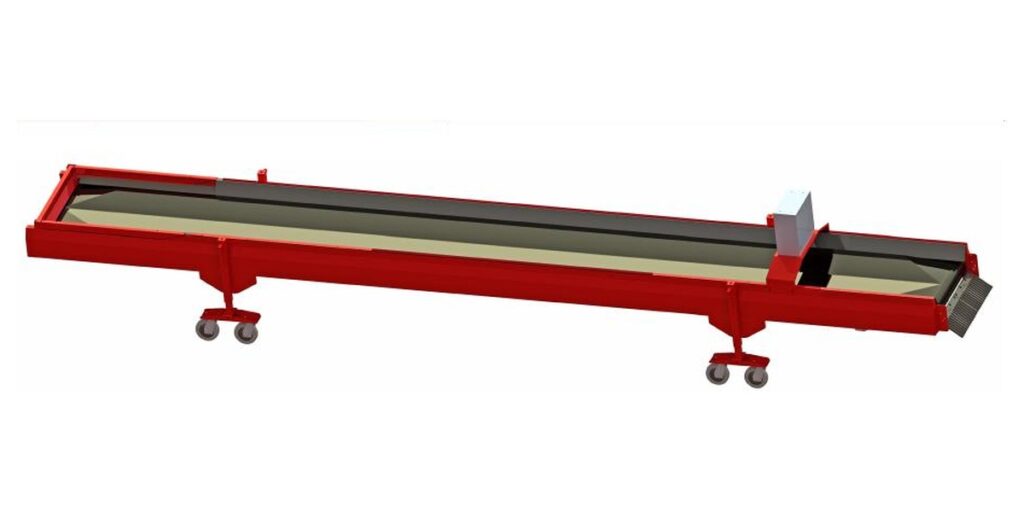
Separate drop impact from belt-speed mismatch
A greater free fall generally gives a potato more downward speed before contact. The consequence also depends on the landing surface, potato orientation and surrounding material. A potato striking a rigid edge experiences a different contact from one settling onto a moving belt. A crop bed may alter the first contact, but it can also conceal rolling, collisions and accumulation underneath. There is no universal safe drop height that can replace a crop-specific trial.
Relative velocity matters as well as height. Potatoes retain horizontal motion as they leave the upstream belt; the receiving belt then has to carry them away. A slower receiving surface can encourage rolling or crowding, while a substantially faster one can change spacing and contact behaviour. Direction changes complicate this further. Both selected conveyors have adjustable speed and height, but their equipment specifications do not give speed ranges. Use available settings as trial variables, not as a guaranteed gentle-handling solution.
Choose geometry before chasing pile-up with speed
First arrange the receiving surface so that potatoes enter its usable carrying area without hitting a frame edge or an obstructing guide. Keep the intended landing zone clear of existing accumulation. If nominal heights do not support the proposed hand-off, reconsider the arrangement rather than assuming that a longer drop is acceptable. Any added transition or support is a project-specific design decision; it is not an implied feature of either conveyor.
Only after the path is satisfactory should speed adjustment be used to establish a stable material stream. A receiving belt that clears the landing point can still deliver an unsuitable bed downstream, so inspect both locations. A hypothetical trial might show that increasing receiving speed removes a pile but causes excessive spreading at the next interface; that would require reassessing the complete hand-off. Our potato handling line solutions can be discussed around these interface requirements rather than capacity labels alone.
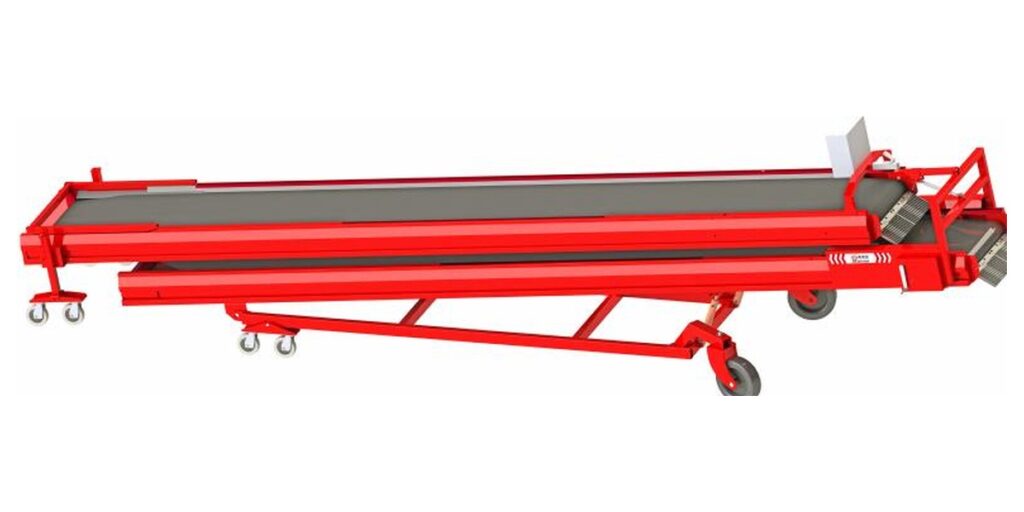
Run a loaded trial with one change at a time
Begin with the installed geometry recorded and the equipment checked without crop by the responsible commissioning team. Introduce a controlled feed, observe the landing zone, then progress toward the intended operating condition. Record actual belt speed where it can be measured safely, or identify the repeatable control setting used. Do not treat a control display as measured belt speed unless its relationship to belt movement is established. Keep upstream feed sufficiently consistent to compare successive settings.
Change one variable at a time: receiving speed, upstream speed or transfer geometry. Observe landing position, bouncing, rolling, bed depth and whether accumulation grows or clears. Include an agreed feed fluctuation rather than judging only perfectly steady operation. Repeat promising settings with representative crop conditions. Use the potato conveying and sorting commissioning checklist to keep this transfer trial aligned with the wider line acceptance record, without substituting a general checklist for direct observation.
| Observed behaviour | Possible mechanism | Next controlled check | Evidence to record |
|---|---|---|---|
| Pile grows at the landing point | Material arrival exceeds local clearance, or contact obstructs movement. | Hold feed steady; check contact position before changing receiving speed. | Pile location, growth over time and response to one adjustment. |
| Potatoes bounce despite sparse feed | Drop contact or an intervening edge dominates the hand-off. | Check the first contact surface and actual release-to-landing geometry. | Contact location, vertical difference and repeated behaviour. |
| Potatoes roll back or crowd together | Relative speed, slope or arrival direction may oppose clearance. | Keep geometry fixed and compare repeatable receiving-speed settings. | Speed setting, rolling direction and bed depth. |
| Spill occurs only during feed surges | The landing zone cannot accommodate the temporary arrival pattern. | Repeat an agreed feed fluctuation at otherwise unchanged settings. | Surge condition, spill position and recovery behaviour. |
| Later damage differs between samples | Transfer contact may contribute, but crop and assessment conditions can confound comparison. | Compare matched upstream and downstream samples under identical assessment conditions. | Lot identity, immediate findings, holding conditions and later findings. |
Separate immediate injury from damage detected later
Agree the sampling method before the trial. Take matched samples immediately upstream and downstream, using the same selection method and comparable quantities. Record pre-existing cuts, scuffs and other visible defects in the upstream sample so they are not automatically attributed to the transfer. Inspect downstream samples promptly for new visible injury. Identify each sample by crop lot, operating setting, feed condition and collection time; otherwise a later comparison may mix unrelated conditions.
A separate assessment should examine damage that becomes detectable later. Agree the holding conditions, assessment interval and inspection method with the buyer’s quality team, and apply them consistently to upstream and downstream samples. Keep this result separate from immediate visible injury. A short observation cannot establish a storage outcome, and a delayed finding alone does not identify its cause. Acceptance should compare the recorded transfer conditions and matched samples against criteria agreed before testing.
Accept a defined operating window and preserve access
Document the accepted interface measurements, speed settings, crop conditions and feed range actually tested. Include photographs or sketches of the transfer, sample results and the conditions that produced accumulation or unacceptable contact. Acceptance should describe a working window, not declare the transfer suitable for every potato lot or every throughput. A change in crop size, surface condition, feed pattern or discharge direction may justify repeating the relevant checks.
The installer must assess pinch points, guarding, access and the means of adjusting or cleaning the interface under site procedures. Moving the machines closer can reduce a gap while creating an access conflict; raising a discharge can alter support requirements. These are installation boundaries, not reasons to reach into a running transfer. We use the geometry and trial record to define the process requirement, while the responsible site team establishes the installation and operating arrangements.
Discuss your potato conveyor transfer interface
Send our engineering team your conveyor transfer requirements with a dimensioned side-view layout, measured release and receiving heights, horizontal gap, discharge direction, current belt speeds or repeatable settings, target feed rate, crop size range and surface condition. Include crop samples, photographs of the transfer and your proposed immediate and later damage acceptance criteria.
- BSSJ8-08: inlet height 800 mm; outlet height 490-890 mm.
- BSS16-08: inlet height 850-1150 mm; outlet height 900-1450 mm.
- BSSJ8-08 capacity: Approximately 80 t/h.
- BSS16-08 capacity: Approximately 80 t/h.
Frequently asked questions
What is a safe drop height for potatoes between conveyors?
There is no universal safe drop height for every crop and transfer. Contact surface, arrival direction, belt movement, crop condition and surrounding potatoes all influence the result. Measure the actual release and landing surfaces, reduce unnecessary abrupt contact, and agree acceptance through representative trials with immediate and later sample assessments.
Does the 850-890 mm nominal overlap prove these conveyors will connect?
No. That overlap only compares one stated outlet range with the other stated inlet range. It does not establish achievable simultaneous settings, horizontal clearance, discharge orientation or the installed working surfaces. A layout review and on-site measurements are needed before the connection can be assessed under load.
Should the receiving conveyor always run faster?
Not necessarily. Increasing receiving speed may clear the landing zone, but it can also change spacing and downstream presentation. First check that potatoes are landing without obstruction. Then compare repeatable speed settings while holding feed and geometry steady, observing both the transfer and the next delivery point.
How do we distinguish incoming damage from transfer damage?
Collect matched upstream and downstream samples from the same trial condition. Record existing visible defects upstream, inspect both samples consistently and keep their identities linked to settings and collection times. Assess later-detected damage separately under agreed holding conditions. Differences require interpretation; they do not automatically prove a single cause.
What should the transfer acceptance record include?
Include measured interface geometry, repeatable speed settings, crop condition, tested feed conditions, landing observations and matched sample results. Record immediate visible injury separately from later-detected damage. State the accepted operating window and any conditions that caused accumulation or unacceptable contact, rather than claiming suitability for every lot or feed rate.
Engineering note
Transfer selection depends on installed working-surface geometry, crop condition and the intended feed pattern. Acceptance should combine a documented loaded trial with matched sample assessments, while installation access and guarding remain the responsibility of the project team.
 English
 Chinese
 Spanish
 German
 French
 Russian
 Urdu
 Bengali
 Kazakh
 Ukrainian
 Dutch
 Polish