
Control potato unloading queues with a manual waiting board showing each load’s arrival time, mass, observed crop condition and specific destination. Keep waiting separate from permission to unload, and release a load only when its receiving route and destination are ready. Check physical transfer connections before relying on conveyor adjustments or storage retrieval equipment. Assign responsibility for updates and remove ready markers whenever the route changes.
Key takeaways
- Keep arrival order separate from authorization to unload.
- Record mass source, crop condition and a specific destination for every load.
- Estimate waiting from queued mass and measured route performance.
- Remove ready markers whenever the destination or transfer route changes.
Separate arrival order from permission to unload
A potato unloading queue becomes difficult to manage when arrival order is treated as permission to tip. A load may be first in line while its destination is occupied, its crop condition needs review, or its transfer route is being changed. Vehicles then advance without a usable receiving path, and operators must interrupt unloading to resolve information that should already be visible.
Use a simple board at the waiting area to distinguish three states: waiting, ready for release, and unloading. Give each load a unique reference that matches its paperwork and waiting position. Assign one person to authorize release and identify who updates the board during a shift change. The purpose is to make the next permissible action visible. A board cannot create receiving capacity or establish that equipment is ready by itself.
Record time, mass, crop condition and destination
Each row should contain arrival time, load mass, observed crop condition and intended destination. Record mass with its source, such as a measured value or a declared estimate; do not present an estimate as a weighing result. Use short condition descriptions that operators understand consistently, such as wet surface, visible soil, mixed sizes or visible damage. Add a load reference and current release state so similar deliveries remain distinguishable.
Write the destination as a specific receiving position, storage allocation or bagging assignment. A broad label such as warehouse leaves the routing decision unresolved. Use text alongside any colored markers so the meaning remains readable without color recognition. When information is missing, mark the row as awaiting review and name the person responsible. Record the time of each status change; otherwise, a ready marker can survive a destination change and become misleading.
Release against the route that is actually available
Arrival time provides a default order, while destination readiness determines whether that order is workable. Before releasing a load, check that the receiving point can accept it, the intended transfer path is available, and the destination has an agreed allocation for the incoming mass. If a load is bypassed, record the reason and keep its original arrival time. This makes exceptions visible and prevents repeated bypassing from becoming an undocumented routine.
As a hypothetical example, an earlier bulk delivery may wait while its storage position is unavailable, while a later bagging delivery uses a separate verified route. That exception is reasonable only if the routes can operate as intended without conflicting at a shared transfer. Review the available potato receiving and handling solutions around these routing requirements. A board should reflect the physical arrangement rather than imply that every destination can receive simultaneously.
Choose the receiving arrangement before setting queue rules
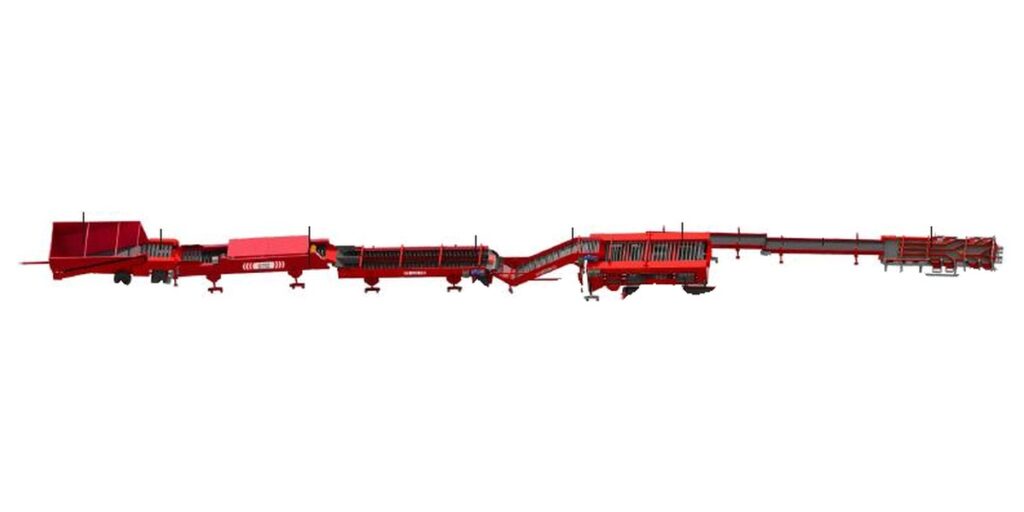
The Potato ton-bag receiving and storage line combines cleaning, picking, lifting, reversible conveying and hydraulic buffer filling for harvest-site use and warehouse intake. Its capacity is configured to project requirements. This makes the project’s intended receiving and filling sequence central to queue planning: identify which destination is available, when it changes, and who communicates that change to the person releasing loads.
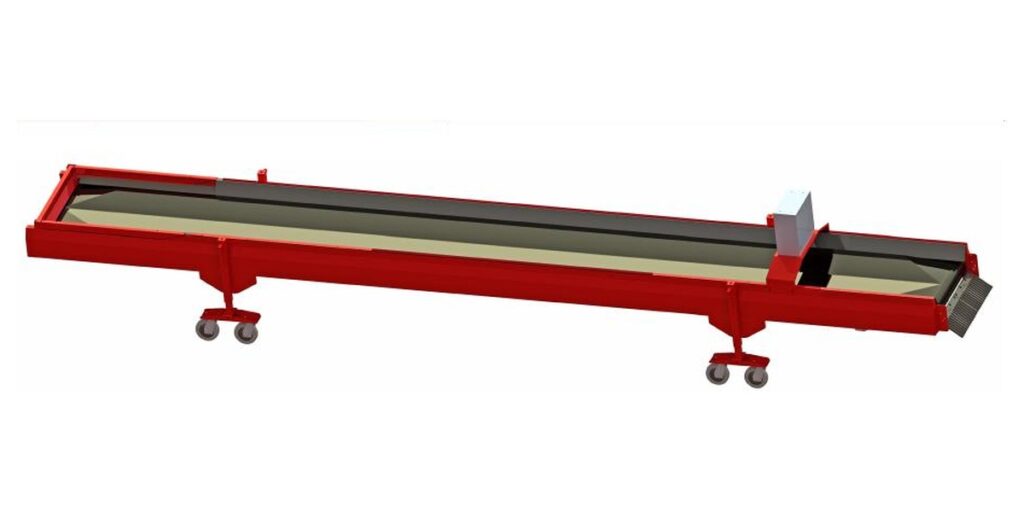
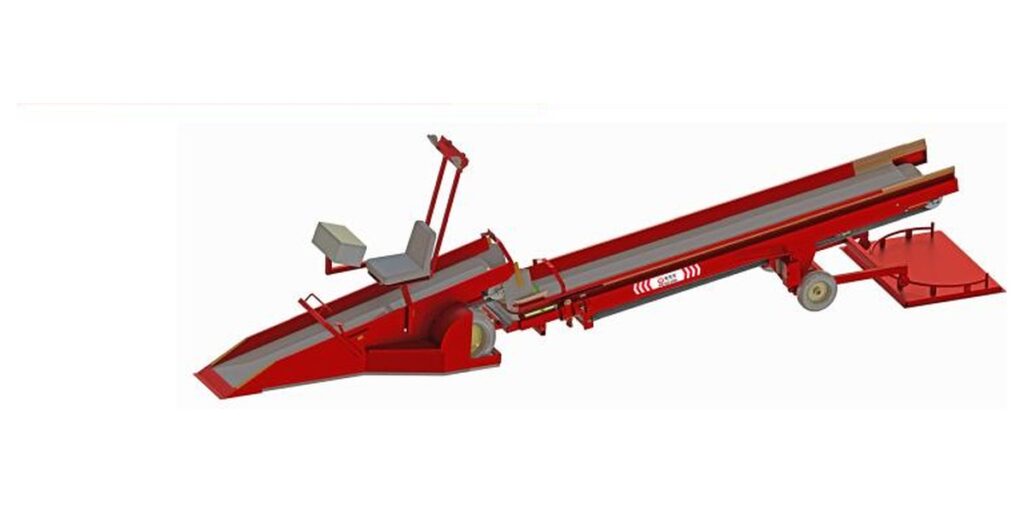
The Potato Conveyor BSSJ8-08 has adjustable height and speed, while the BCCD-611 bulk storage retrieval and transfer machine has an adjustable discharge position. The BCCD-611 moves potatoes from storage; it is not a holding vessel with a stated buffer volume. Select these machines around measured transfer positions and the destination arrangement. Their individual capacity ratings do not establish a combined intake rate or the number of vehicles a waiting area can accommodate.
| Equipment and duty | Individual capacity | Relevant configuration | Check before release |
|---|---|---|---|
| Ton-bag receiving and storage line: harvest-site receiving and ton-bag warehouse intake | Configured to project requirements | Combines cleaning, picking, lifting, reversible conveying and hydraulic buffer filling; reversible conveying supports continuous bag filling. | Confirm the project’s receiving sequence and available filling destination. Establish the complete route’s operating rate through project acceptance. |
| BSSJ8-08: conveying between process stages | Approximately 80 t/h | Adjustable height and speed; inlet height 800 mm; outlet height 490–890 mm. | Check handoff alignment at the selected settings and confirm that downstream equipment can receive the flow. Do not use this rating alone to schedule arrivals. |
| BCCD-611: bulk storage retrieval and transfer | Approximately 60 t/h | Adjustable discharge position; conveying length 7900 mm contracted and 11000 mm extended. | Confirm discharge reach and destination availability. Assess storage allocation separately: this machine has no stated holding volume. |
Verify where potatoes enter, transfer and leave
Draw the actual route from unloading point to destination, including every transfer and any shared discharge position. Compare receiving elevations, discharge reach and available floor space with the proposed equipment arrangement. Adjustable height can help align a conveyor handoff, but alignment must be checked at the chosen operating setting. Likewise, an adjustable storage discharge position requires a usable receiving location throughout the intended movement.
Observe how potatoes leave one surface and meet the next during a controlled material trial. Look for overshoot, accumulation, spillage and abrupt changes in direction. The BSSJ8-08’s finger-shaped buffer and the BCCD-611’s flexible outlet buffer plate do not establish a site-specific damage result. Inspect samples before and after the transfer using an agreed method. Mark a route ready on the board only after its receiving position and operating arrangement have been checked.
Use queued mass to interpret waiting time
Vehicle count alone is a poor description of the work waiting at intake. Add the mass of loads assigned to each destination and compare it with the receiving rate measured for that route. Dividing queued mass by that measured rate gives an initial processing-time estimate. Add observed changeover and interruption time separately. Keep the units consistent, and label the result as an estimate because crop condition and destination availability can change during the shift.
Assume a hypothetical queue contains 30 tonnes assigned to one route, with no further arrivals, route changes or stoppages, and that the route sustains an observed receiving rate of 15 tonnes per hour. Processing time is then 30 tonnes divided by 15 tonnes per hour, or two hours. Add changeover and interruption time separately, and update the estimate when conditions change. Use the guide to sizing a potato cleaning intake line to review route requirements before setting unloading appointments.
Test both the board procedure and material flow
Agree on trial conditions before starting: representative crop samples, load references, destination assignments, starting equipment settings and the method for measuring received mass and elapsed time. Include a normal release, a destination change and a temporary hold. Record when each load arrives, becomes ready, starts unloading and finishes. Separate active material transfer time from waiting and interruption time so a slow queue is not automatically attributed to the conveyor.
Acceptance should cover two results: whether the agreed route handles the trial material at the agreed operating requirement, and whether the board consistently communicates the correct release decision. Set project-specific criteria for transfer observations, crop inspection and queue records in advance. Use the potato conveying and sorting commissioning checklist to structure equipment checks. If the route changes during testing, record the new arrangement and repeat the affected observation. A successful trial under one crop condition does not establish performance for every subsequent delivery.
| Observation | Record or check | Release decision | Follow-up |
|---|---|---|---|
| Oldest load has no available destination | Original arrival time, intended destination and reason it is unavailable | Keep waiting; release another load only through an available verified route | Review repeated destination conflicts and retain the bypass reason |
| Mass is unknown or only estimated | Mass source and whether the value is measured or declared | Resolve the destination allocation before release | Replace the estimate when a measured value becomes available |
| Potatoes accumulate at a transfer | Location, active transfer time, equipment settings and crop condition | Hold the next release while the cause is reviewed | Adjust the affected arrangement and repeat the material observation |
| Route changes after a ready marker is issued | Time of change, affected loads and new destination status | Remove readiness until the revised route is checked | Test whether the board update reaches the release operator |
| Waiting grows despite uninterrupted transfer | Arriving mass and measured receiving rate over the same period | Reassess release estimates against the observed route rate | Review arrival scheduling and destination allocation |
Keep release markers valid through interruptions
The most important maintenance task for a manual board is removing stale permission. When a destination closes, a transfer stops or a routing assignment changes, return affected loads to waiting until the route is reviewed. Keep completed rows separate from active rows, while retaining their timestamps for shift review. At handover, the incoming operator should reconcile the board with the loads physically waiting and the destinations currently available.
Use the records to identify repeated causes of delay: missing load information, destination conflicts, transfer accumulation or frequent route changes. Change the relevant operating rule or physical arrangement, then test that change. Keep the board under named operator control: equipment adjustments do not update its status or authorize the next load. This manual coordination method depends on current information, clear release authority and a checked receiving route.
Plan a queue board around your receiving route
Discuss your potato unloading route with our engineering team. Send representative crop samples or condition descriptions, typical load masses and arrival patterns, target receiving rate, destination assignments, a dimensioned site layout with transfer elevations, available electrical supply, shift arrangements and proposed acceptance criteria.
- Ton-bag receiving and storage line capacity: Configured to project requirements.
- BSSJ8-08 capacity: Approximately 80 t/h.
- BSSJ8-08 dimensions: 8050 × 1300 × 1300 mm; belt width 800 mm; inlet height 800 mm; outlet height 490-890 mm.
- BCCD-611 capacity: Approximately 60 t/h.
Frequently asked questions
What information should a potato unloading queue board show?
Show a unique load reference, arrival time, mass, observed crop condition, intended destination and current release state. Identify whether mass is measured or estimated. Record status-change times and assign responsibility for updates so the release operator can distinguish a current instruction from an outdated marker.
Should potato loads always unload in arrival order?
Arrival order is a useful default, but the assigned destination and transfer route must be available. An earlier load may need to wait while another uses a separate verified route. Record every bypass reason and preserve the original arrival time so delayed loads remain visible and exceptions can be reviewed.
Can a conveyor’s published capacity determine unloading appointments?
An individual conveyor capacity does not establish the receiving rate of the complete route. Transfers, destination changes and interruptions affect unloading time. Measure received mass and elapsed time under representative conditions, separate active transfer from delays, and use that observed route rate when estimating waiting or scheduling arrivals.
Does this arrangement include an automatic queue dashboard?
No automatic dashboard is part of the manual queue method described here. Assign operators to update load information, check destination readiness and authorize release. Conveyor or discharge adjustments support physical routing; they do not update the board. If digital queue control is required, define it separately in the project scope.
How should we accept a queue-control trial?
Agree on crop samples, destination assignments, operating requirements and inspection criteria before testing. Record arrival, readiness, unloading start and completion times. Test a destination change and temporary hold as well as normal unloading. Acceptance should assess both material flow through the agreed route and the accuracy of the board’s release instructions.
Engineering note
Receiving-route selection depends on crop condition, load mass, destination availability and measured transfer geometry. Agree on acceptance criteria for representative material flow and manual release decisions, then record trial conditions so the results remain tied to the arrangement tested.
 English
 Chinese
 Spanish
 German
 French
 Russian
 Urdu
 Bengali
 Kazakh
 Ukrainian
 Dutch
 Polish