
A potato dry-cleaning line should separate soil removal, manual inspection and grading into distinct process duties. Remove surface soil before workers inspect the potatoes, then grade the accepted stream before packing. Physical module positions can vary, but transfers, reject routes and feed presentation must preserve those duties. Establish the operating rate through a crop trial rather than combining individual machine ratings.
Key takeaways
- Separate soil removal, manual selection and grading into distinct process duties.
- Preserve accepted and removed-material routes when repositioning modules.
- Use individual capacity ranges for selection, not as a combined line rating.
- Sample each duty and test connected operation under representative crop conditions.
Define the process sequence before drawing the layout
The operating problem is not simply moving potatoes through several machines. It is presenting sufficiently clean, inspectable potatoes to workers, then delivering the accepted stream to grading without mixing it with removed material. If the sequence is unclear, soil can obscure the inspection surface, workers can face overlapping potatoes, and downstream accumulation can disrupt an otherwise satisfactory cleaning stage. A floor plan alone does not explain which module changes the material condition and which only transfers it.
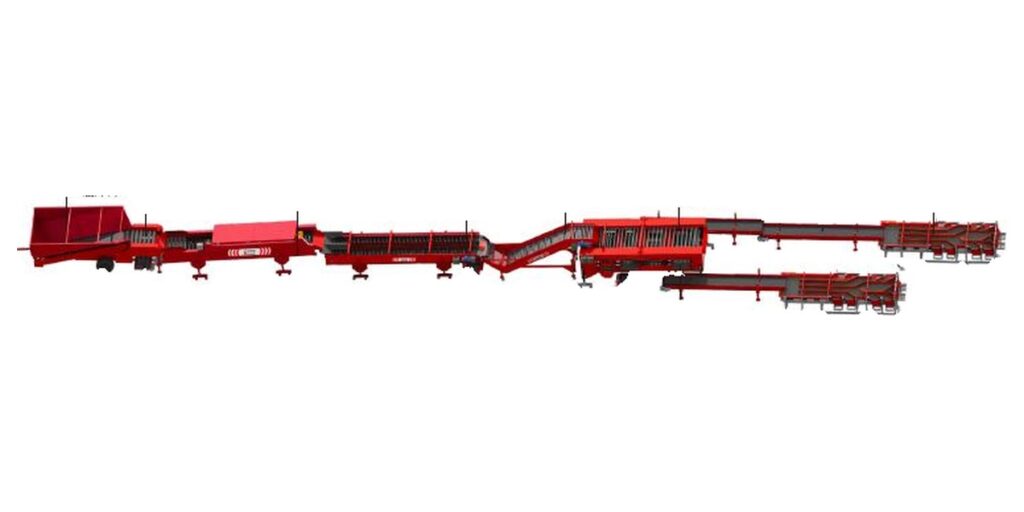
The Potato dry-cleaning sorting line combines the cleaning machine, dry cleaner, selection platform, lifter, sorting machine, conveyor and bagging machine. Each module can be repositioned or used independently. We therefore distinguish the process order from the physical arrangement: receiving and soil removal prepare the crop, manual selection removes unwanted potatoes, grading separates the accepted crop, and packing receives the resulting streams. The exact arrangement remains a project decision.
Keep soil-removal duties separate from inspection decisions
A cleaning stage changes the material presented to the next operation; an inspection stage makes a decision about individual potatoes. These duties should have separate labels in the flow diagram even when the equipment stands close together. For a configuration containing both a cleaning machine and a dry cleaner, define what each is expected to remove and examine the material between them. Do not assume that two cleaning stages have interchangeable duties or that their presence proves a particular final cleanliness.
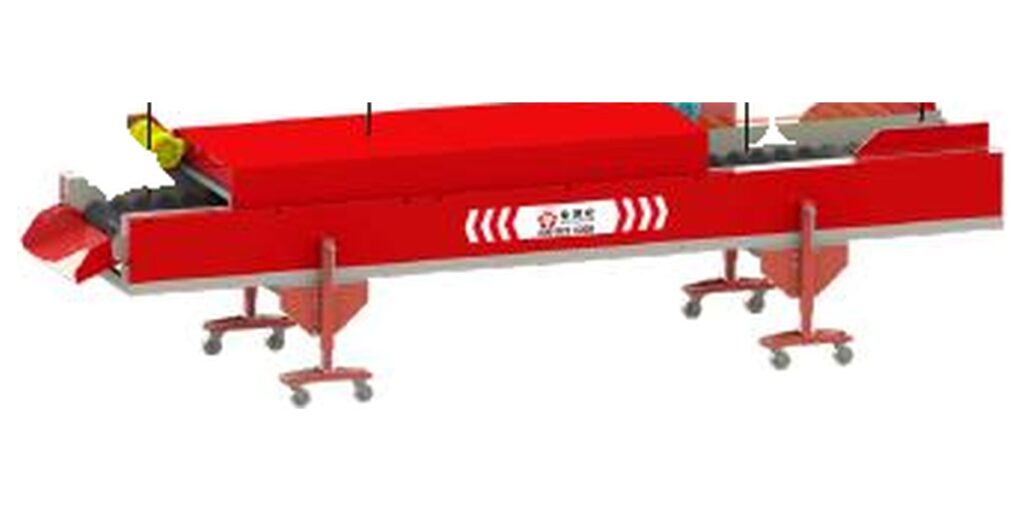
The Potato dry cleaning machine uses rotating brushes to remove surface soil while potatoes move forward continuously. This explains why cleaning belongs before manual inspection: reducing surface soil can make the exterior easier to examine. It does not establish performance on every soil condition. Attached soil, crop moisture and incoming variation must be represented in the trial. Check the remaining soil after cleaning separately from the number of unwanted potatoes removed later.
Make the cleaning-to-selection hand-off observable
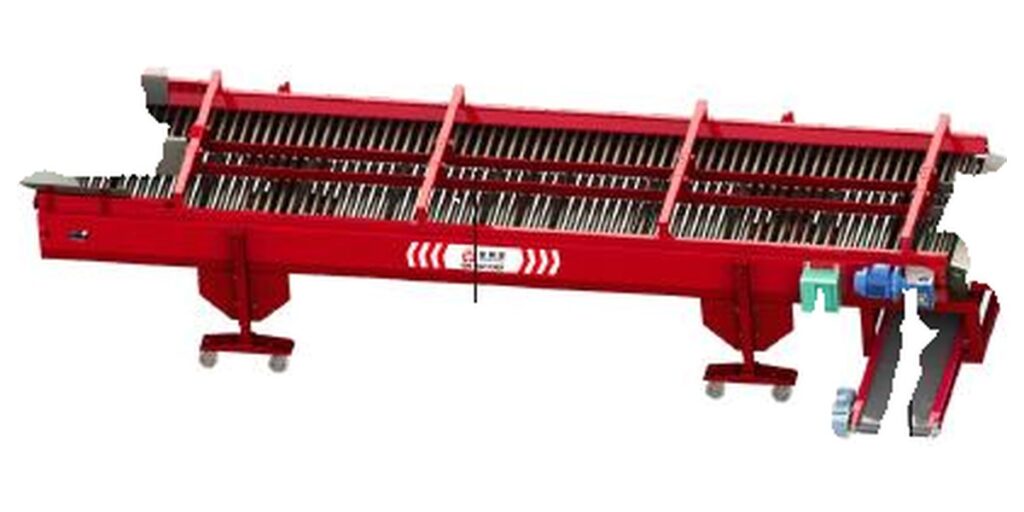
The Potato selection platform uses chain-driven stainless rollers. Friction rotates each potato through 360° while workers remove bad potatoes to the central waste channel. Rotation exposes different exterior surfaces, but successful manual selection still depends on visibility, presentation and the time available to make a decision. It should not be treated as automatic defect detection or as evidence that every unwanted potato will be removed.
At the hand-off, look for clusters arriving together, potatoes hidden beneath others and uneven distribution across the inspection area. These are commissioning observations, not additional machine specifications. Compare the material entering inspection with the accepted and removed streams over the same interval. If unwanted potatoes remain in the accepted stream, first distinguish obscured surfaces from excessive operator demand. Increasing upstream delivery can worsen both problems even while the cleaning machine continues to pass material without visible accumulation.
Choose the arrangement without inventing a line rating
The published capacities describe individual equipment or a project-configured line; they are not a calculation of combined output. The dry cleaner is listed at 7-10 t/h and the inspection platform at 5-15 t/h. Those ranges do not establish a shared operating point for a particular crop, staffing level or downstream arrangement. Treat them as selection information, then evaluate the proposed process as a connected system. Neither adding the ratings nor adopting the highest figure produces a defensible line capacity.
The long-board and short-board cleaning versions can operate alone or in a line. Their different stated lengths matter when comparing available space, but no separate capacities or cleaning outcomes are specified for the two versions. Review the footprint, transfer positions and access needs together. Our potato processing line solutions provide a starting point for discussing a configuration; the process drawing should still show each duty, its incoming material and its outgoing stream rather than imply a universal equipment order.
| Product | Capacity | Configuration information | Decision supported |
|---|---|---|---|
| Potato dry-cleaning sorting line | Configured to project requirements | Combines the cleaning machine, dry cleaner, selection platform, lifter, sorting machine, conveyor and bagging machine; each module can be repositioned or used independently. | Plan the required duties and connections; establish total capacity and footprint for the proposed project. |
| Potato dry cleaning machine | 7–10 t/h | Long board: 5300 × 1550 × 1350 mm; short board: 3800 × 1550 × 1350 mm; adjustable height: 1350–1700 mm. | Compare available space and transfer arrangements. Neither version has a separately stated capacity or cleaning outcome. |
| Potato selection platform | 5–15 t/h | Dimensions: 5600 × 2150 × 1100 mm; adjustable height: 960–1300 mm. | Review space and transfer compatibility, then assess presentation and manual inspection demand during the crop trial. |
Draw transfers and reject routes as distinct connections
Once the process duties are defined, add the conveying and lifting connections where the proposed arrangement needs them. These connections move material; they do not replace cleaning, selection or grading. Label the accepted route toward grading and the removed-material route away from it. At inspection, show the central waste channel as a separate destination. For grading, identify the intended output categories before assigning packing destinations, so an operator can trace each stream without relying on the equipment’s position in the room.
Review each transfer for receiving height, discharge alignment, spreading and any location where potatoes could collect. The stated adjustable equipment heights are useful inputs, but they do not by themselves establish inlet or outlet compatibility. Avoid inferring an allowable drop from overall machine dimensions. A practical drawing should distinguish equipment dimensions from project-selected transfer details. During commissioning, observe those details with material present: an empty connection may appear clear while a clustered crop stream piles up or arrives unevenly.
Use a crop trial to find where the sequence loses control
Prepare a trial lot that represents the proposed supply, including the relevant size range, surface soil and moisture condition. Keep contrasting conditions identifiable rather than blending everything into one average lot. Begin with a controlled feed that allows observation at each hand-off, then increase delivery only while the next operation remains inspectable and the downstream route stays clear. This is a recommended trial method, not a statement that automatic feed regulation is included in the equipment.
Take samples before cleaning, after cleaning, after manual selection and at the grading outputs. Use an agreed interval and consistent sampling method so the results describe the same operating period. Record input mass, elapsed time, staffing, remaining surface soil, unwanted potatoes in the accepted stream and acceptable potatoes in the removed stream. For arrangement planning, see our guide to modular layouts for dry-cleaning potato lines; use trial observations to evaluate the proposed hand-offs. Change one controllable condition at a time and repeat the observations before attributing an improvement to that change.
| Observed problem | Compare these locations | Record | Decision supported |
|---|---|---|---|
| Soil obscures inspection surfaces | Before and after dry cleaning | Crop condition and residual surface soil using the agreed assessment method | Assess cleaning performance before changing manual inspection arrangements. |
| Unwanted potatoes reach grading | Inspection inlet and accepted outlet | Visibility, overlap, staffing and unwanted potatoes in the accepted sample | Separate presentation problems from manual decision demand. |
| Acceptable potatoes enter the waste stream | Accepted outlet and central waste discharge | Accepted and removed sample classifications against the same criteria | Review selection instructions and removal decisions. |
| Material accumulates after inspection | Inspection discharge and grading inlet | Timing, accumulation location and downstream interruptions | Investigate the transfer or downstream restriction before raising upstream feed. |
| Graded outputs do not match agreed categories | Grading inlet and each graded output | Input size distribution and samples from each output | Evaluate grading separately from soil removal and manual rejection. |
Accept each duty and then the connected process
Agree on acceptance criteria before the trial. Cleaning needs a defined way to judge residual surface soil; selection needs agreed descriptions of what workers should remove; grading needs specified output categories and a checking method. Define the sample size and evaluation method with the buyer rather than imposing unsupported universal limits. Record both unwanted material that passes onward and acceptable potatoes that are removed. These two outcomes reveal different problems and should not be merged into a single quality score.
Then assess the connected process over an agreed run duration at the proposed feed condition. Note interruptions, accumulation, staffing and any need to reduce delivery. A satisfactory sample from an isolated module does not prove that the complete arrangement maintains the same result continuously. Likewise, a brief surge through the equipment does not establish sustained line output. The acceptance record should tie the observed rate and quality to the tested crop, configuration and operating conditions, with untested conditions clearly outside the conclusion.
Preserve the sequence when crop conditions change
A configured line remains sensitive to what arrives at receiving. A change in attached soil can alter the material presented to inspection; a change in the proportion of unwanted potatoes can increase manual removal demand even at the same mass flow. Downstream grading or packing restrictions can also force accumulation upstream. When output deteriorates, inspect the first point where the stream changes unfavorably instead of assuming that the last machine in the sequence caused the problem.
For a hypothetical example, suppose workers report more unwanted potatoes reaching grading after a different crop lot enters. Compare post-cleaning visibility and inspection presentation before considering a higher cleaning duty or additional inspection staffing. If the surfaces are clear but potatoes overlap, the hand-off deserves attention first. Keep the accepted trial conditions as a reference and repeat targeted sampling when conditions change. This approach preserves the distinction between cleaning effectiveness, manual selection performance and downstream flow, rather than treating them as one undiagnosed line problem.
Plan the sequence around your crop and operating requirements
Send our engineering team your dry-cleaning line requirements, including representative crop samples, size range, soil and moisture condition, target hourly feed and shift duration, removal criteria, grading categories, packing requirements, planned inspection staffing, available floor plan, transfer constraints and site electrical supply. Include your proposed sampling method and acceptance criteria so we can discuss a configuration and trial around the same operating objectives.
- Line capacity: Configured to project requirements.
- Dry-cleaning machine capacity: 7-10 t/h.
- Selection platform capacity: 5-15 t/h.
- The long and short board versions can operate alone or in a line.
Frequently asked questions
Should dry cleaning come before manual potato selection?
Dry cleaning belongs before manual selection when surface soil interferes with inspection. Rotating brushes remove surface soil as potatoes move forward, while workers make removal decisions at the inspection stage. Test the actual crop to establish whether the resulting surface visibility is sufficient; the sequence alone does not guarantee a particular cleanliness.
Can the modules be rearranged to fit our building?
The configured line's modules can be repositioned or used independently. Physical repositioning should preserve the required process duties and stream destinations. Review transfer heights, alignment, inspection presentation and removed-material routes before adopting a floor plan. Overall equipment dimensions do not establish every inlet, outlet or transfer detail.
Can we use the individual capacities to specify total line output?
No. The dry cleaner is listed at 7-10 t/h and the selection platform at 5-15 t/h, while line capacity is configured to project requirements. A connected operating rate also depends on crop condition, inspection demand and downstream flow. Establish the proposed rate through an agreed trial of the configured process.
Does the longer dry-cleaning version provide better cleaning?
The long-board and short-board versions have different stated dimensions, but no separate cleaning outcomes or capacities are specified. Choose between them using the proposed arrangement and available space, then evaluate surface-soil removal with representative crop samples. Length alone is not evidence of superior cleaning performance.
What should we measure during acceptance?
Measure feed over a defined interval, residual surface soil, unwanted potatoes passing inspection, acceptable potatoes removed and the conformity of graded outputs. Also record staffing, interruptions and accumulation. Agree on sampling and acceptance criteria beforehand, and relate the result to the tested crop and configuration rather than all possible operating conditions.
Engineering note
Crop condition, inspection demand, transfer geometry and downstream availability determine the project operating point. Acceptance should use agreed samples, evaluation criteria and run conditions, with conclusions limited to the configuration and material tested.
 English
 Chinese
 Spanish
 German
 French
 Russian
 Urdu
 Bengali
 Kazakh
 Ukrainian
 Dutch
 Polish